
MM2H 2026: The Complete Guide
Published Updated Last fact-checked

US$1,000,000 versus US$32,000: that is the widest gap in deposit requirements between the five routes under the new MM2H 2026 rules.
Over the past few years, almost every client’s first question has been “Can I apply for MM2H?” (Malaysia My Second Home, the country’s long-stay visa program). But in 2024 MOTAC (the Ministry of Tourism, Arts and Culture) restructured the program. The single MM2H category was split into three tiers, Silver, Gold and Platinum, plus a separate Special Economic Zone / Special Financial Zone route (SEZ/SFZ, in Johor, where the official site requires buying property in Forest City). Add Sarawak’s S-MM2H, issued independently by the Sarawak state government, and there are now in practice five routes to a Malaysian second home. Each has different thresholds, visa lengths, work rights and location restrictions.
In this MM2H 2026 complete guide, I use the latest policy (the current conditions on the official MM2H website and Sarawak’s official conditions) to break down the real differences between the five routes: who should take which, which details are most easily missed, and what to think through before you apply.
Exchange rate: US$1 ≈ RM 4.06 (snapshot on 29 October 2026, for reference only).
Contents
- MM2H 2026: the five routes at a glance
- Why MM2H was restructured
- Silver: the entry tier for testing the water
- Gold: the sweet spot for part-time residents
- Platinum: the only MOTAC tier that allows work
- SEZ/SFZ (Johor): the lowest deposit of the four MOTAC tiers
- Sarawak S-MM2H: the independent East Malaysia route
- How to choose among the five MM2H 2026 routes
- The new MM2H 2026 minimum stay rules
- Three generations: who can be included as dependents
- Government fees and agent fees in detail
- Application process and timeline
- The four most common application mistakes
- MM2H 2026 frequently asked questions
MM2H 2026: the five routes at a glance
Ordered by deposit requirement, from lowest to highest:
| Route | Fixed deposit | Visa length | Property purchase required | Minimum stay | Can work | Government fee |
|---|---|---|---|---|---|---|
| SEZ/SFZ (Johor) | US$32,000 to US$65,000 | 10 years (5+5) | Forest City only | Under 50: 90+ days / 50+: exempt | No | RM 1,000 |
| Sarawak S-MM2H | RM 500,000 | 10 years (5+5) | Optional | 30+ days a year in Sarawak | Limited part-time work | RM 5,000 |
| Silver | US$150,000 | 5 years | At least RM 600,000 | Under 50: 90+ days / 50+: exempt | No | RM 1,000 |
| Gold | US$500,000 | 15 years (5+5+5) | At least RM 1,000,000 | Under 50: 90+ days / 50+: exempt | No | RM 3,000 |
| Platinum | US$1,000,000 | 20 years (5+5+5+5) | At least RM 2,000,000 | Under 50: 90+ days / 50+: exempt | Yes (full-time) | RM 200,000 |
Minimum age: Silver, Gold and Platinum applicants must be at least 25; SEZ/SFZ applicants must be at least 21 (official MM2H website, updated 10 February 2026).
Why MM2H was restructured
Before 2024, an earlier version of MM2H had a single threshold that applied to everyone: a fixed deposit of RM 500,000 (about US$123,000) for applicants under 50 or RM 300,000 (about US$74,000) for those 50 and over, monthly income of RM 10,000 (about US$2,460), and a 10-year visa.
The Malaysian government identified several problems:
- The threshold was too low, so many successful applicants never really spent money in Malaysia or boosted domestic demand
- With a single threshold, high-net-worth holders still could not start a business or work locally after getting the visa, so the program did little to attract talent
- Regional balance: special economic zones (particularly the Forest City financial zone) needed foreign capital
So the 2024 to 2025 restructuring aimed to split the program into tiers (the SEZ route for lower budgets, Silver and Gold for the middle, Platinum for high net worth), require a property purchase (all four MOTAC tiers require buying property, keeping deposit money in Malaysian real estate) and offer long visas (15 years for Gold and 20 for Platinum, to attract long-term residents).
Sarawak S-MM2H sits outside the MOTAC system. It is issued independently by the Sarawak state government, with different thresholds, processes, banks and guarantor rules.
Silver: the entry tier for testing the water
A fixed deposit of US$150,000 (about RM 609,000), a property purchase of at least RM 600,000 (about US$148,000), and a 5-year visa.
Who it suits:
- People who want to try MM2H without yet knowing whether they will stay long term
- People with limited capital who can still put together about RM 1.2 million (about US$298,000) for the deposit plus the property
- People who do not need to work in Malaysia
Main strengths: the lowest deposit of the three main tiers (Silver, Gold, Platinum), and a government fee of only RM 1,000 (about US$250), compared with RM 200,000 for Platinum, a 200-fold difference. The RM 600,000 property threshold still buys a small condo in urban KL.
Main limits: the 5-year visa is the shortest of the four MOTAC tiers, and you must apply to renew when it expires. Applicants under 50 must stay at least 90 days in total each year, and the requirement is stated per year, so do not plan on a 450-day total over five years to cover a short year. Work is not allowed.
A typical client: families relocating for school. I have handled several clients like this: the child starts international school at 9, the mother holds Silver while the child holds a student pass, and the father keeps working in their home country and flies to KL at weekends and holidays. After five years I suggest they reassess: depending on whether the child will continue studying here, they can decide whether to upgrade to Gold.
Gold: the sweet spot for part-time residents
A fixed deposit of US$500,000 (about RM 2.03 million), a property purchase of at least RM 1,000,000 (about US$246,000), and a 15-year visa (5+5+5).
Who it suits: people with upper-middle wealth who want to live here long term but do not plan to work in Malaysia; part-time residents who spend 90+ days a year here but still have business at home or in Hong Kong; and people who are bullish on holding Malaysian property for the long term.
Main strengths: the 15-year visa (5+5+5) is Gold’s biggest selling point. The government fee is only RM 3,000 (about US$740), against RM 200,000 for Platinum. The RM 1,000,000 property threshold gives plenty of choice in KL’s Mont Kiara, TRX and Damansara Heights. And the deposit is half of Platinum’s.
Main limits: work is not allowed (to work you need Platinum, where the deposit jumps from US$500,000 to US$1,000,000). The US$500,000 deposit is tied up for 15 years (although up to 50%, US$250,000, can be withdrawn after approval for approved purposes such as buying a home).
A typical client: retired business owners around 50. I have seen several clients like this sell their property back home to prepare for a move to KL. I usually suggest buying a condo of about RM 1.5 million (about US$369,000) to live in, keeping US$500,000 in the fixed deposit, and using the permitted 50% withdrawal (US$250,000) to fund the purchase or move into ringgit fixed deposits or the stock market. They spend six months a year in KL and six months back home.
Platinum: the only MOTAC tier that allows work
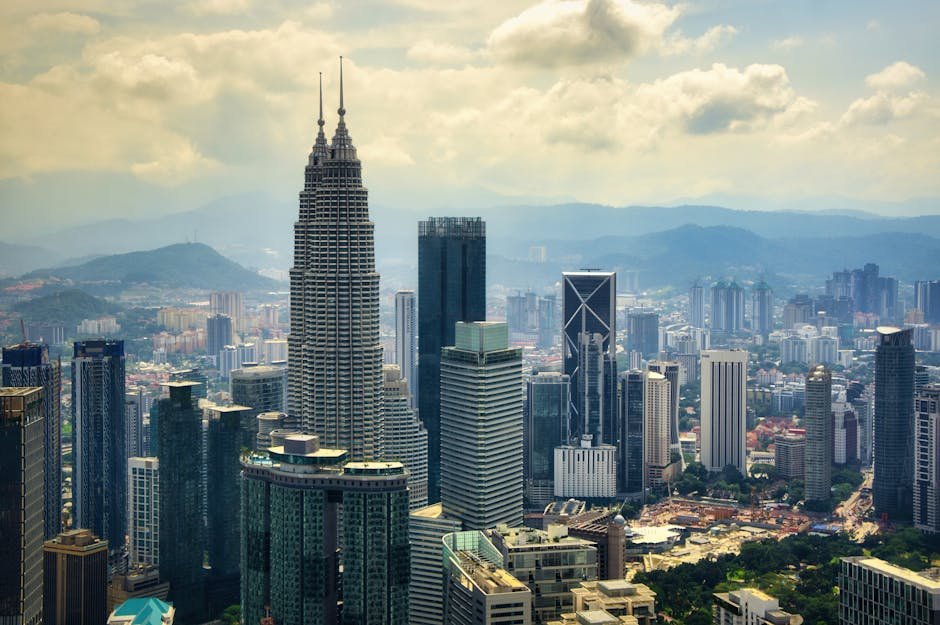 Photo: Pexels / Joerg Hartmann
A fixed deposit of US$1,000,000 (about RM 4.06 million), a property purchase of at least RM 2,000,000 (about US$493,000), a 20-year visa (5+5+5+5), and full-time work or business allowed.
Who it suits: people who want to work full-time or actively run a business in Malaysia. High net worth (a US$1,000,000 deposit plus a RM 2,000,000 property, about US$1.49 million committed in total). People who want long-term residence, to bring three generations, and possibly to consider permanent residence later.
Main strengths: the only one of the four MOTAC tiers that allows local employment, running a company or investing in a business. A 20-year visa (5+5+5+5) is effectively quasi-permanent residence. After approval, up to 50% (US$500,000) of the deposit can be withdrawn for approved purposes such as buying a home, which turns half the deposit into usable funds.
Main limits and hidden costs: a government participation fee of RM 200,000 (about US$49,300), paid once. Add agent fees of RM 50,000 to RM 70,000 (about US$12,300 to US$17,200), plus property transfer costs, stamp duty and so on, and the first-year cash outlay can exceed US$1.5 million. In effect the RM 200,000 works as an entry charge for high-net-worth applicants, not a tax.
A typical client: I recently helped a 45-year-old tech executive who had been posted by headquarters to the company’s KL regional office for three years but hoped to stay long term and start his own business. My plan for him: Platinum plus a Sdn Bhd company (a Malaysian private limited company) plus a condo in KLCC. After three years he would start a fintech business locally and stay for 20 years.
SEZ/SFZ (Johor): the lowest deposit of the four MOTAC tiers
The official full name is the Special Economic Zone / Special Financial Zone route. It is located in Johor, and applicants can apply from age 21. Fixed deposit: US$65,000 (about RM 264,000) for ages 21 to 49, US$32,000 (about RM 130,000) for ages 50 and over. A 10-year visa (5+5), and the official site requires buying property in Forest City, Johor, after approval.
Who it suits: people with the most limited capital who still want MM2H; people who accept life in Johor Bahru or commuting across the border to work in Singapore; and retirees aged 50 and over.
Main strengths: for applicants 50 and over, a fixed deposit of just US$32,000 (about RM 130,000), the lowest of all five routes. A 10-year visa, plus no minimum stay for ages 50 and over. There is no fixed national minimum, but the floor price follows Johor’s property acquisition policy, and you must buy directly from a developer in Forest City.
Main limits and details: the official site requires that property be bought in Forest City, Johor. The purchase must be completed within the deadline stated in your approval letter, so check it early. Work is not allowed. Forest City is a financial zone project developed by Country Garden, and its amenities are still being built out.
A typical client: a 65-year-old retiree on a limited budget who wants to live in Southeast Asia long term and fly to Singapore regularly to see grandchildren. A US$32,000 deposit plus a Forest City condo bought directly from the developer to live in. They stay 6 to 9 months a year, with family coming for short stays.
Sarawak S-MM2H: the independent East Malaysia route
A fixed deposit of RM 500,000 (about US$123,000), a minimum age of 30, at least 30 days a year in Sarawak, and limited part-time work.
Sarawak’s official program site could not be checked for this update. The figures in this section follow the conditions the state announced for 2025 as reported in the press and by agents, so confirm each one with Sarawak’s MTCP before you apply.
Who it suits: people who are happy with life in East Malaysia and have a limited budget; people who like nature, retirement or a slower pace; and people who do not want to be tied to MOTAC’s 90-day minimum stay.
Main strengths: the most relaxed stay requirement (30 days a year in Sarawak). Allows limited part-time local work (reported as up to 20 hours a week in professions such as education, banking, manufacturing and healthcare). Holders can be a 49% minority partner in a joint-venture company (capital of at least RM 250,000, about US$61,600). A one-time processing fee of RM 5,000 (about US$1,230), compared with RM 200,000 for Platinum.
Main limits: residence is limited to Sarawak, and you cannot stay long term in West Malaysia. The age threshold of 30 means anyone younger cannot apply. You must keep at least RM 250,000 in the fixed deposit untouched. The guarantor must be a licensed agent in Sarawak or a local resident. The medical check must be completed in Sarawak and endorsed by a government doctor.
A typical client: a 40-year-old freelancer (consultant or designer) looking for a low-cost place close to nature for part-time residence. Kuching plus part-time teaching or consulting. A RM 500,000 fixed deposit plus proof of monthly income of RM 10,000 (about US$2,460), shown with the last three months’ payslips.
How to choose among the five MM2H 2026 routes
I have simplified the choice among the five MM2H 2026 routes into six scenarios:
1. You want to work full-time or start a business in Malaysia: only Platinum allows it (a US$1,000,000 deposit plus a RM 2,000,000 property, about US$1.49 million or more committed in total).
2. You are 50 or older and do not want to be tied to a minimum stay: any of Silver, Gold, Platinum or SEZ (no minimum stay at 50+). Sarawak still requires 30 days a year.
3. Limited capital, and Forest City in Johor is acceptable: SEZ (a deposit of US$32,000 to US$65,000, the lowest of the five routes).
4. You like the slower pace of East Malaysia and are 30 or older: Sarawak S-MM2H (a RM 500,000 deposit, limited part-time work, plus a minority stake in a business).
5. City living in West Malaysia as a part-time resident: Gold (a 15-year visa, a RM 1,000,000 property and a government fee of only RM 3,000).
6. Testing the water, unsure whether to stay long term: Silver (a 5-year visa, a US$150,000 deposit, the lowest entry point of the three main tiers).
The new MM2H 2026 minimum stay rules
The old MM2H had no clear minimum stay. The current conditions on the official MM2H website are explicit:
- Under 50: a cumulative stay of at least 90 days each year (the main applicant, spouse and/or dependents all count)
- Ages 50 and over: the main applicant, spouse and dependents do not need to meet any minimum stay
The requirement is stated per year, so do not count on a 450-day total over five years. Plan to meet it every year rather than staying 30 days one year and hoping to make it up with 150 the next.
This hits people who split their time between their home country and Malaysia hardest. Many had planned to move back and forth, using Malaysia as a low-tax base. Applicants under 50 now have to take the 90 days a year seriously, or risk being refused at renewal. Applicants 50 and over have more room, a hint that the government wants to attract older retirees.
Three generations: who can be included as dependents?
The official MM2H website lists the dependents of a main pass holder clearly:
- Spouse
- Children under 21: biological, step or adopted
- Unmarried children aged 21 to 34: biological, adopted or step
- Parents and parents-in-law
- Children with a disability certified by a doctor (no age limit)
Some common misunderstandings: “Children over 21 cannot be included” is wrong: unmarried children aged 21 to 34 can be. “Parents-in-law cannot be added” is wrong: they can. “Children with a disability have an age limit” is wrong: there is none.
Sarawak S-MM2H covers a slightly narrower group: spouse, parents and children under 21 only.
MM2H 2026 government fees and agent fees in detail
Whenever I review a budget with clients, most count only the deposit and the property and forget the one-off fees:
| Tier | Government participation fee | Agent fee (typical private example) | One-off total |
|---|---|---|---|
| Silver | RM 1,000 | RM 40,000 | RM 41,000 (about US$10,100) |
| Gold | RM 3,000 | RM 55,000 | RM 58,000 (about US$14,300) |
| Platinum | RM 200,000 | RM 70,000 | RM 270,000 (about US$66,500) |
| SEZ | RM 1,000 | RM 40,000 | RM 41,000 (about US$10,100) |
| Sarawak | RM 5,000 (including processing fee) | Depends on agent | RM 5,000+ (about US$1,230+) |
Platinum’s RM 200,000 government fee is about 67 times Gold’s fee and 200 times the Silver and SEZ fee. In effect it works as an entry charge for high-net-worth applicants; it is a participation fee, not a tax. The agent fees are typical ranges charged by private agents. You can save the agent fee by handling the process yourself, but the process is cumbersome and I do not recommend it.
Application process and timeline
The standard process for MOTAC’s four tiers (Silver, Gold, Platinum, SEZ) has nine steps:
- Sign the agency agreement and pay a 10% deposit (to the agent)
- Prepare documents: passport, medical check, police clearance, proof of funds, insurance
- Certify documents: all documents must be translated and certified by government authorities
- Submit the application: through the agent to the MOTAC OSC
- Wait for approval: typically 3 to 6 months in my experience (Silver, Gold, Platinum)
- Receive the approval letter: complete the next steps (and, for SEZ, the property purchase) within the deadlines stated in your approval letter
- Fixed deposit, medical check and insurance: completed in Malaysia
- Visa endorsement: completed at the Immigration Department
- Hold the property for 10 years: confirm with MOTAC’s MM2H Centre when the 10 years start
Sarawak S-MM2H has a similar but separate process, managed by Sarawak’s MTCP, and applications must go through a licensed Sarawak agent.
The four most common MM2H 2026 application mistakes
The pitfalls I have seen most often among clients in recent years:
1. Planning on a five-year total instead of 90 days each year
The requirement for applicants under 50 is stated per year, so plan to meet it every year. MOTAC checks entry records at renewal.
2. Platinum’s RM 200,000 government fee buried late in the process by the agent
This fee must be paid after the approval letter is issued, and if you are not told about it when you apply, it comes as a nasty surprise. Before deciding on Platinum, include the RM 200,000 in your total cost.
3. Not thinking through the SEZ requirement to buy in Forest City
Forest City is a Country Garden project, and its amenities are not yet complete. Before choosing the SEZ route, I strongly recommend visiting in person once or twice to make sure you can live with it.
4. Missing Sarawak’s minimum age of 30
Sarawak S-MM2H applicants must be at least 30. Apply at 29 and you will be rejected outright.
Frequently asked questions
Q1. What is the biggest change in MM2H after the 2026 restructuring?
The single threshold became four tiers (Silver, Gold, Platinum, SEZ), plus the independent Sarawak route, for five routes in total. Deposit requirements range from US$32,000 to US$1,000,000. Visa lengths range from 5 to 20 years. Property requirements range from the Johor floor price in Forest City to RM 2,000,000.
Q2. Which MM2H tier gives the longest visa?
Platinum, at 20 years (5+5+5+5), is the longest. Next is Gold at 15 years (5+5+5), then SEZ and Sarawak at 10 years (5+5), and Silver is the shortest at 5 years.
Q3. What are the MM2H 2026 minimum stay requirements?
Applicants under 50 must stay a cumulative 90 days each year; applicants 50 and over are exempt. The key point: the requirement is stated per year, so plan to meet it every year rather than relying on a five-year total. Sarawak S-MM2H requires 30 days a year in Sarawak regardless of age.
Q4. Which MM2H tier allows work?
Of the four MOTAC tiers, Platinum is the only one that allows full-time work or running a business. Sarawak S-MM2H allows limited part-time work (reported as up to 20 hours a week in professions such as education, banking, manufacturing and healthcare) and a minority stake as a joint-venture partner; confirm the current terms with Sarawak’s MTCP. The other three tiers (Silver, Gold, SEZ) do not allow work.
Q5. How long does an MM2H 2026 application take?
For MOTAC’s four tiers, approval typically takes 3 to 6 months in my experience, and after the approval letter you complete the medical check, fixed deposit, insurance and visa endorsement in Malaysia within the deadlines stated in the letter. The whole process can usually be finished within six months to a year. SEZ applicants must also buy property within the stated deadline, which makes the timeline tighter.
Q6. I already hold the old MM2H. Does the 2026 restructuring affect me?
Holders of the old MM2H renew under their original conditions. But when that renewal comes due, MOTAC may require you to move to one of the four new tiers. I suggest existing holders start assessing now whether Silver or Gold makes more sense for them.
Want to go further?
Directions to explore next:
- Not sure which tier fits you? Take the 3-minute MM2H matching quiz: six questions, matched automatically
- Want an interactive comparison of the five tiers? MM2H five-tier comparison page (with a decision matrix)
- How the minimum stay is counted → MM2H minimum stay requirements explained
- Property conditions to know before you apply → Foreign buyer thresholds by state in Malaysia
Sources: the official MM2H website (MOTAC, updated February 2026) and Sarawak’s official conditions. Official government documents prevail for actual applications. This article is for reference only and does not constitute visa or legal advice. Please confirm your personal situation with a professional adviser before applying.
For more like this: our LINE community, YouTube channel "Hi 我是David" (in Mandarin), or email david.lai@xinwaycapital.com.