
MM2H Is Not Immigration: 5 Common Misunderstandings
Published Updated
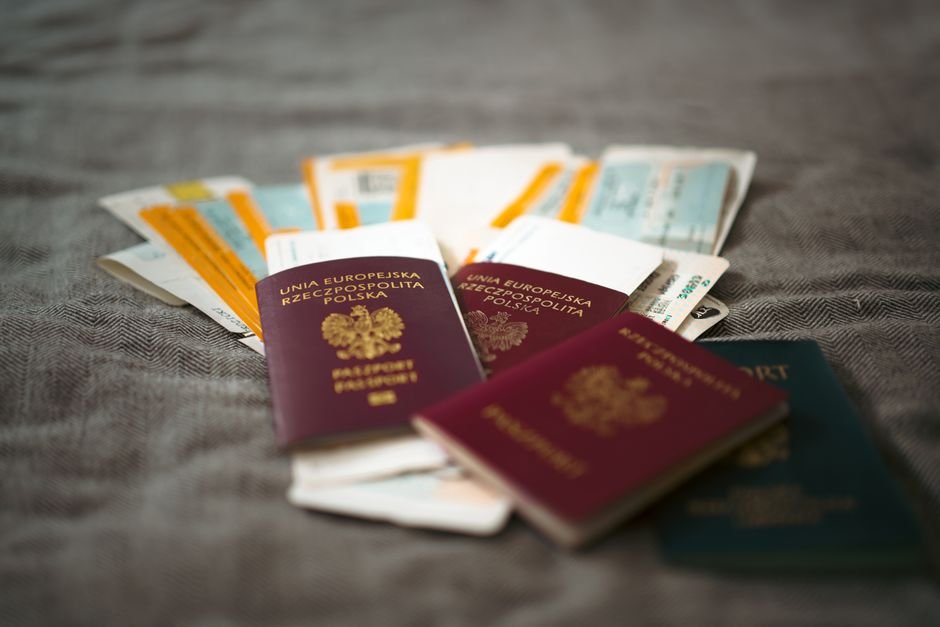
“Once I get MM2H, do I count as Malaysian? Will my children be able to pay local fees at a public university?”
A client asked me this during a consultation last week. He had already signed with an agent and was preparing his documents before he realized he had not really understood what MM2H is. I stopped and went through everything again: what MM2H is, where the boundaries of the status lie, and the practical issues he would face over the next ten-plus years. His first words afterward were: “What I imagined is very different from reality.”
The phrase “MM2H immigration” has been around for a long time, and many people assume it is an immigration visa that changes your status once you have it. It does not. MM2H is a long-term residence visa. In essence you remain a foreigner, with a pass that allows you to live in Malaysia long term. That difference affects your tax, property purchases, work rights and even your children’s education plans.
In this article I set out the 5 facts people most often get wrong. If you are assessing MM2H, or have already signed with an agent but do not yet fully understand the rules, this is for you.
Contents
- MM2H is not immigration: your passport stays the same
- You do not have to buy property before getting MM2H
- MM2H does not automatically lower your tax
- Most MM2H tiers do not allow you to work
- The 90 days of residence are counted every year
- So what is MM2H? A more accurate definition
- Frequently asked questions
- Further reading
MM2H is not immigration: your passport stays the same
Start with the most fundamental point. MM2H stands for Malaysia My Second Home. Literally, it is a “second home”, not a “new home”.
After you get MM2H, only one thing changes: a visa sticker is added to your passport. Your passport itself does not change, your nationality does not change, and you remain a citizen of your original country.
In 12 years of property work, this is the first misunderstanding I meet most often. Clients ask:
- “Can I vote once I have MM2H?” No, you are not a citizen
- “Can my child on an MM2H dependent pass pay local fees at a public university?” No, they still pay international student fees
- “Can I get a Malaysian passport for travel with MM2H?” Absolutely not, you still use your own passport
- “Does MM2H come with a pension or public health coverage?” No, those are rights of citizens
MM2H is a status for living here; legally you remain a foreigner who is allowed to reside in Malaysia long term. The policy aims to bring people here to retire, spend and support the economy, not to turn them into Malaysians.
Renewal is a hard rule too
MM2H is not valid forever once granted. Each tier comes with a different visa term:
- Special Economic Zone / Special Financial Zone (Johor): 10 years
- Silver: 5 years
- Gold: 15 years (in practice issued as 5 + 5 + 5)
- Platinum: 20 years (in practice issued as 5 + 5 + 5 + 5)
At every 5-year renewal, the government reviews you again: whether you met the 90-day residence requirement, kept the fixed deposit, held on to the property and maintained health insurance. If any of these is a problem, renewal may be refused and you revert to ordinary foreigner status.
Many people never had this explained clearly by their agent. MM2H is not a “lifetime pass”; it is closer to long-term residence on a renewable contract.
You do not have to buy property before getting MM2H
“I heard you have to buy property for MM2H. I haven’t decided where to buy yet, so should I wait?”
This is the second most common misunderstanding I hear. The visa and the property purchase are two completely separate steps.
The MM2H property requirements work like this:
- Silver (US$150,000 fixed deposit): buy property of at least RM 600,000 (about US$148,000) within the deadline in your approval letter
- Gold (US$500,000 fixed deposit): buy property of at least RM 1,000,000 (about US$246,000) within the deadline in your approval letter
- Platinum (US$1,000,000 fixed deposit): buy property of at least RM 2,000,000 (about US$493,000) within the deadline in your approval letter
- Special Economic Zone (US$32,000 to US$65,000 fixed deposit): buy directly from a developer in Forest City, Johor, at or above the floor price set by Johor’s property acquisition policy
So the answer: most tiers do require a property purchase, but you can get the visa first and then look for property. Once the approval letter arrives you have the period it states, which gives you time to look and choose without rushing.
I strongly recommend clients follow this order:
- Decide which tier to apply for
- Submit the application and receive the approval letter
- Enter Malaysia with the approval letter and view properties and neighborhoods in person
- Decide where to live and whether the investment logic makes sense
- Buy, completing before the deadline in your approval letter
If you do it the other way round and rush to buy before applying, and the application is rejected or the policy changes, your home becomes a pure investment property. That order is possible, but the risk is yours.
I break down the property requirements for every tier in the MM2H 2026 complete guide. If you are unsure whether to buy as part of MM2H, read that first.
State rules take precedence over the MM2H threshold
One detail many people overlook: the MM2H property threshold is only the floor; each state’s threshold for foreign buyers is what actually applies.
For example, if you take the Silver tier (only RM 600,000) but want to buy in Kuala Lumpur, you still need RM 1,000,000 or more, because that is KL’s foreign buyer threshold. Johor, Penang and Selangor each have their own rules, and some states set a lower threshold for MM2H holders: Penang, for example, sets RM 500,000 (about US$123,000), on the island and the mainland, for strata and landed homes alike, residential only, up to 2 units (Penang Land Office guideline, August 2024).
I have compiled the details in Malaysia foreign buyer property threshold by state. Check it before you buy.
MM2H does not automatically lower your tax
“Once I have MM2H, can I pay tax at Malaysian rates, which are lower than at home?”
This is the third most common misunderstanding. MM2H and tax status are two separate systems. Getting MM2H does not automatically make you a Malaysian tax resident.
Malaysian tax residency turns on one thing: whether you spend 182 days in Malaysia in a year.
- 182 days or more: tax resident, taxed at progressive rates (0% to 30%) with personal reliefs available
- Fewer than 182 days: non-resident, with employment income, rental income and dividends that are not tax-exempt taxed at a flat 30%, and no personal reliefs
In other words, even with a 20-year Platinum MM2H, if you live in Malaysia only 90 days a year (the minimum residence obligation), you will always be a non-resident, and the Malaysian government will tax you at the foreigner rate.
I have been in exactly this position myself. I am a PVIP holder and run a business in Malaysia, but in many years I did not reach 182 days, and in those years I paid tax at the foreigner rate. That is not an MM2H issue; it is the tax residency rule.
To save tax with Malaysian rates, you have to actually live here. I break down the 182-day rule in more detail in Malaysia’s 182-day tax residency rule.
Does MM2H itself come with tax benefits?
Very few, and they change with policy. The one stated in MOTAC’s current terms is that incoming funds such as the fixed deposit are not taxed on remittance. Other benefits you may hear about from agents should be checked against the latest official announcements before you count on them.
This does not justify expecting MM2H to save you a lot of tax. If you really want to reduce tax, what matters is tax residency under the 182-day rule.
Most MM2H tiers do not allow you to work
 Image: Pexels / Tran Nhu Tuan
This is the easiest trap to fall into. MM2H was designed for retirement and spending, not to let foreigners compete for local jobs. So most tiers allow neither employment nor business activity.
According to the current version of the official MM2H website (updated 10 February 2026):
| Tier | Employment allowed? | Business allowed? |
|---|---|---|
| Special Economic Zone | No | No (business and investment activities not allowed) |
| Silver | No | No (business and investment activities not allowed) |
| Gold | No | No (business and investment activities not allowed) |
| Platinum | Yes | Yes |
The word most often misunderstood here is “business”. Many people think the restriction only means you cannot draw a salary, and that setting up your own company and running it is fine. But for Silver, Gold and the Special Economic Zone tier, the official site marks both “business and investment activities” and “employment opportunities” as not allowed; only Platinum opens both.
So “take no salary, draw shareholder dividends instead” is not a workaround either. If you hold Silver, Gold or the Special Economic Zone tier and plan to set up a company in Malaysia, confirm with your agent and lawyer before applying, rather than discovering after the visa is issued that your status does not fit.
If you need to work or run a business full time, aim for Platinum
If your goal is to earn money in Malaysia or run a company and pay yourself a salary, go straight for the Platinum tier (US$1,000,000 fixed deposit, RM 2,000,000 property and RM 200,000 (about US$49,300) in government fees). It is the only MOTAC tier with full work rights in Malaysia.
If your budget does not stretch to Platinum but you want formal work status in Malaysia, MM2H is not your answer. Consider an Employment Pass or the PVIP (Premium Visa Program) instead. I compare PVIP in the complete PVIP guide.
The 90 days of residence are counted every year
Since 2024, the Peninsular Malaysia version of MM2H (not Sarawak’s S-MM2H in East Malaysia) has had a hard rule: applicants under 50 must live in Malaysia for at least 90 days each year.
Applicants aged 50 and over have no such requirement.
Many people’s first reaction is “90 days isn’t much, I’ll easily make that up”. In practice it is not so simple.
How counting the 90 days can trip you up
- Counted per year: the requirement is stated as 90 days in one year, so do not plan on topping up 30 days this year with 60 days next year
- Shortfalls show up at renewal: if you fall short in a year, it can count against you at renewal (or even lead to refusal)
- The family can share: the 90 days can be met by the principal applicant and/or dependents combined
- Entry and departure days: confirm with your agent or the MM2H Centre how they are counted, and keep a margin
One case I have seen: a client stayed 100 days in the first year without any problem. In the second year he was busy with his business back home and spent only 40 days in Malaysia, thinking “it’s a 15-year Gold visa anyway, I’ll stay longer later to make up”. At the 5-year renewal, the government looked at his residence record over the 5 years and found he had stayed only 380 days in total (an average of 76 days a year). He was asked to submit additional documents explaining the shortfall.
The 90 days are not an optional suggestion; they are a hard requirement for renewal. If your work or family means you cannot spend 3 months a year in Malaysia, rethink whether MM2H suits you at all, or whether you should simply come and go visa-free for short stays.
I cover the details of the 90 days, the rules for sharing with family and how to plan trips in practice in the complete guide to the MM2H stay requirement. Always review your residence record in the year before renewal.
So what is MM2H? A more accurate definition
Having gone through the 5 myths, here is MM2H in one sentence:
MM2H is the Malaysian government’s long-term residence visa program for foreigners: proof of funds, a fixed deposit and a property purchase in exchange for 5 to 20 years of residence, with a few tax and lifestyle benefits, but you remain a foreigner.
Broken down:
- It is a visa, not a new status: your passport and nationality do not change
- It is based on proof of funds: the fixed deposit, property and government fees make up the threshold
- It is renewable: reviewed every 5 years and renewed only if you still qualify
- It carries a residence obligation: 90 days a year if you are under 50, counted each year
- It restricts work: only Platinum allows employment
If you understand MM2H as “paying for a long-term pass”, your expectations will be accurate. If you think of it as immigration, a change of status, a second passport or a way to halve your tax, you will be disappointed.
Among the clients I have worked with directly over 12 years of property practice, those most satisfied with MM2H are usually financially independent retirees, business owners with cross-border businesses and families relocating for their children’s schooling. All three fit the policy’s intent, and for them MM2H is a useful tool, not a button that changes their life.
Frequently asked questions
Q1. Can I get a Malaysian passport after moving on MM2H?
No. MM2H is a long-term residence visa, not a path to naturalization. Malaysia’s naturalization requirements are very strict (generally more than 10 years of residence, passing a Malay language test, and in principle no recognition of dual citizenship). Holding MM2H for 20 years does not make you a citizen automatically.
Q2. Once we have MM2H, can my child pay local fees at a public university?
No. A dependent pass holder is still a foreigner, so public universities such as Universiti Malaya (UM) and UKM charge international student fees. Only naturalization or Malaysian citizenship gives access to local fees.
Q3. Can I keep my home-country public health insurance after moving on MM2H?
That depends on your home country’s rules, typically on whether you keep your registration there and whether your coverage lapses. In Taiwan, for example, anyone who keeps household registration must keep paying National Health Insurance premiums even while abroad; the option to suspend coverage ended on 23 December 2024. Because everyone’s situation differs, check directly with your home country’s health insurance authority.
Q4. Can I bring my parents with me on MM2H?
Yes. You can bring your spouse, children under 21, unmarried and unemployed children aged 21 to 34, children with a certified disability, and parents or parents-in-law. Platinum participants may also bring foreign domestic helpers. Confirm the details with your agent before applying.
Q5. If I get MM2H but later decide not to live in Malaysia, can I withdraw?
Yes, and it is relatively simple. Notify your agent and MOTAC’s MM2H Centre, return the visa sticker, dispose of the property (if any) and withdraw the fixed deposit, and you have voluntarily given up MM2H status. The deposit and the property sale are entirely in your control, but note the 10-year restriction on selling the property, and check with your agent and lawyer what applies after you exit.
Q6. Do I have to pay the fixed deposit again at every renewal?
No. The fixed deposit is placed once and maintained, not paid again each year. As long as it stays in the account untouched, the government simply checks the balance at renewal. The property purchase is a one-off transaction; as long as the property is still in your name, you do not buy again. At renewal you pay the government renewal fee (which differs by tier) and any agent service fees, not the deposit or property price again.
Further reading
Want to go further? These topics fill in the other angles you need for an MM2H decision:
- The complete MM2H 2026 application guide: five tiers and the latest requirements
- The MM2H stay requirement: how to count the 90 days without tripping up
- The MM2H application process step by step: 8 steps, 3 to 6 months, and why an approval letter is not a visa
- The complete PVIP guide: how it differs from MM2H and why I chose PVIP
- Malaysia’s 182-day tax residency rule: it has nothing to do with your visa
For more like this: our LINE community, YouTube channel "Hi 我是David" (in Mandarin), or email david.lai@xinwaycapital.com.