
Choosing a Malaysia International School Curriculum: Child First
Published Updated

“My friend’s child is doing really well in the IB, and I hear the IB is accepted everywhere. Surely my child can’t go wrong with the IB too?”
A mother who came to me for advice last month said exactly this. Her child had just turned 12 and had been at a public school back home: above-average grades, but rather passive, only getting homework done when teachers and parents kept checking. After hearing her description, I told her directly: “With your child’s personality, the IB could be a disaster.”
She paused. “But my friend says the IB is the best.”
That is the whole problem. Choosing a Malaysia international school curriculum should start from “which system suits your child,” rather than “which system is the best.” The two questions sound almost the same, but they can lead to completely different conclusions.
I should say how I come to these conversations. I am not a parent, and I am not an education consultant either. My work is in real estate, and for 12 years it has kept putting me at the kitchen table with families deciding where to live and where their children will study; more than a hundred of those families were relocating for school. So this article stays with one decision I have watched many of them make: how to tell whether a system suits your child.
Contents
- The most common mistake in choosing a Malaysia international school curriculum: syllabus first, child second
- Before choosing a Malaysia international school curriculum, answer four honest questions about your child
- The personality types each of the four systems suits
- A real case: how one family ended up in an IB nightmare
- What if you cannot read your child’s personality?
- Frequently asked questions
- Want to go further?
The most common mistake in choosing a Malaysia international school curriculum: syllabus first, child second
Among the families I have worked with, about 80% start in this order:
- Search online or ask friends “which system is the best”
- Hear that the IB is accepted everywhere, well regarded and highly recognized by universities
- Decide on the IB
- Start looking for the best IB school in KL
- Interview, pay the fees, enroll
- The child collapses under the pressure in the first year
I am not trying to run down the IB. It is an excellent program. The real problem is skipping the step of assessing the child’s personality.
Why “syllabus first” goes wrong
The international school systems available in Malaysia differ a great deal:
- IB (IBDP + MYP + PYP): whole-person education, inquiry-based and interdisciplinary, with a high share of internal assessment. It demands a great deal of self-discipline and the ability to plan independently
- IGCSE + A-Level (British): clearly structured subjects and standardized exams, suited to children who do well learning subject by subject
- AP + American high school: flexible electives, which require students to plan their own course choices actively
- Malaysian private schools: structured more like a conventional national school system but taught in English, so the adjustment cost is lower
These four systems have completely different teaching philosophies. Choosing among them with the logic of “the more famous, the better” is like forcing every child into the same shoe regardless of the shape of their feet.
Among the cases I have seen in KL over the past five years, most families who ended up changing schools, taking a break from school or even moving back home because of the wrong system got there because the system did not fit the child’s personality, not because there was anything wrong with the school itself.
Before choosing a Malaysia international school curriculum, answer four honest questions about your child
I suggest parents spend one to two weeks at home observing and discussing these four questions before they start looking at schools. Do not skip this.
Question 1: Does your child plan for themselves, or need structure and a push?
- Plans for themselves: schedules their own study time without being chased, looks things up on their own, asks the teacher or Google when stuck → suits the IB or the American system
- Needs structure and a push: does nothing unless checked on, does well when the teacher’s instructions are clear, likes an environment where “what we study today, when the test is and what it covers” are all spelled out → suits IGCSE + A-Level
This is the question parents are most likely to answer optimistically. Most parents feel their child is “actually quite disciplined.” The real test is simple: if over the past two years 80% or more of your child’s homework and projects were driven by you or a tutoring center, the answer is “needs structure and a push.” Be honest. It is not a flaw, just a type.
Question 2: Does your child learn best subject by subject, or across subjects?
- Subject by subject: likes clear boundaries (“math is math, English is English”) and finds cross-disciplinary projects confusing → IGCSE + A-Level
- Across subjects: enjoys thinking about geography and history together and is interested in using a project to solve a problem → the IB or the American system
Question 3: Is your child’s university direction clear, and which country?
- Clearly aiming for universities in the UK, Hong Kong or Singapore: IGCSE + A-Level is the most direct route
- Clearly aiming for US universities (Ivy League or state universities): AP + the American system with the SAT is the most direct route
- Wants to keep global options open, undecided: IB scores are recognized worldwide
- Plans to return to a top university in your home country: take the IB or the British system and check what admission routes your home country offers applicants with overseas qualifications, or switch back into the home-country system
Question 4: How much day-to-day pressure can your family accept?
- Can support a full three-to-four-year cycle of intense study (homework until 11 every night, weekends spent on the Extended Essay) → the IB or American AP both work
- Wants the child to keep normal sleep, weekend rest and time for after-school activities → IGCSE or A-Level is easier to manage
This question is often skipped, yet it decides the family’s quality of life for three years. The two years of the IB Diploma are widely regarded as among the most demanding high school programs in the world. If you choose it, you will be supporting your child through two hard years, and parents need to be ready for that.
The personality types each of the four systems suits
I have summarized the four main systems in a simple table to compare against your answers to the four questions:
| System | Personality it suits | Personality it does not suit |
|---|---|---|
| IB (IBDP) | Self-disciplined, interdisciplinary, finds resources independently, resilient under pressure, strong sense of purpose | Needs to be pushed, prefers clearly separated subjects, low resilience to pressure |
| IGCSE + A-Level (British) | Learns subject by subject, likes structure, university direction leans British | A child who wants maximum freedom of electives |
| AP + American | Many interests, plans their own course choices, aiming for US universities | A child who does not know what they want and cannot work independently |
| Local private school (bilingual) | Needs a gradual bridge into English, family budget is limited | A family certain it wants a fully international route |
This table is not the only standard
I want to stress one thing: no system is “absolutely better.” The IB is not a cure-all, and IGCSE is not second-rate. They are simply different tools that suit different children.
The line I repeat most often to parents in consultations is: “You are not choosing the most impressive system for your child. You are choosing the tool that fits them.”
For a more detailed comparison of IB, IGCSE and AP (exam formats, university recognition, fees and school options), see my complete comparison of IB vs IGCSE vs AP. This article is about how to choose; that one is about how they differ.
A real case: how one family ended up in an IB nightmare
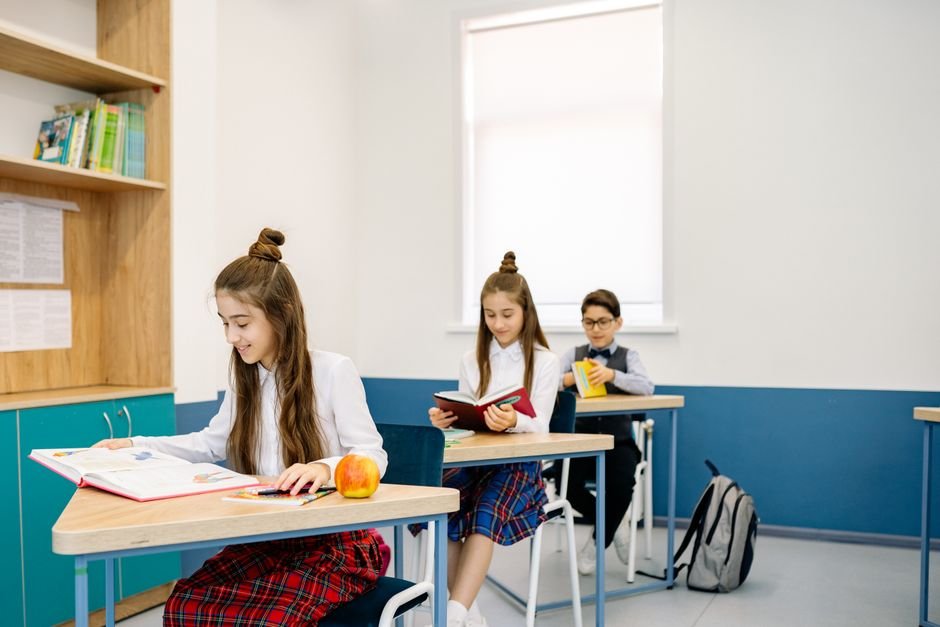 Photo: Pexels / Yan Krukau
This is the case that has stayed with me most over the past few years (shared with the client’s consent, identifying details removed).
Family background
- Main applicant: a senior executive in the tech industry
- Accompanying parent: the mother, full time
- Child: 14, having just left an exam-driven school system back home
- The family’s logic: “The IB is accepted everywhere and gets more students into top universities, so the IB can’t be wrong”
In 2023 the child entered MYP Year 4 (typically age 14 to 15) at an IB school in KL. The school itself was very good, with teaching staff and facilities well above average.
What happened in the first year
- The child was actually the “passive, needs structure” type, pushed along at home by parents and a tutoring center
- The IB MYP emphasizes inquiry-based learning and interdisciplinary projects, completely different from anything the child had experienced
- Teachers acted more as guides than as the ones doing the pushing
- First-semester grades were acceptable (the child got by on intelligence), but things started falling apart in the second semester
- The family fell into a daily cycle of mother and child fighting over homework
- By the end of the school year, the child was showing signs of school refusal
Why it happened
When the mother looked back on it with me afterwards, she said something I still remember: “I thought he would naturally become more proactive in a new environment. It turned out he hadn’t changed yet, because that simply isn’t his personality.”
It was not the IB’s fault, and it was not the school’s fault. The system did not fit the child’s personality. In an IGCSE + A-Level environment with clearly separated subjects, standardized exams and teachers who push, this child might well have done far better than in the IB.
How the story ended
In the second year they moved to an IGCSE school elsewhere in KL. Within six months the child’s grades, state of mind and the atmosphere at home had all improved noticeably. The cost to the family: an extra year of fees, another round of admissions interviews and a lot of emotional energy. But not moving would have cost more.
I share this case not to scare you but as a reminder: getting the system wrong is a bigger problem than whether the fees are high.
What if you cannot read your child’s personality?
If you are still unsure after answering the four questions, these are the practical suggestions I usually give:
Let your child spend one to two transition years in the MYP or IGCSE and watch how they do
If your child is still between 11 and 13 (before the two final high school years of the IBDP or A-Level), enroll them in the MYP (the IB middle years) or IGCSE Year 9-10, where the pressure has not yet peaked. Use those one to two years to watch how your child learns, then decide which route to take for the final two years.
Some schools also offer a mid-course switch, for example choosing between the IB Diploma and A-Levels after the MYP, which gives families a buffer.
At the interview, ask the school what kind of student the system suits
A good admissions officer will not only talk up the school. They will tell you honestly what kind of student struggles there. If a school only says nice things during admissions and never mentions any red flags, that is a red flag in itself.
Talk to your child, and do not decide for them
Children aged 12 to 16 already have a clear sense of themselves. They may not be able to say “I suit inquiry-based learning,” but they can certainly answer “Do you want the teacher to tell you what to do every day, or do you want to decide for yourself?”
Many families skip this conversation. Your child is the one who will spend three to four years in that classroom, so give them a say.
Think about entry age and English at the same time
International school admissions look not only at the system but also at how adaptable the child is. The younger the child, the easier the transition; at 13 or older with weak English, the chances of being admitted drop. I cover this in more detail in international school entry age in Malaysia, and families with children aged 13 or older should read it first.
Frequently asked questions
Q1. Do we have to choose the IB to be competitive at a Malaysia international school?
No. The IB, IGCSE + A-Level and AP are all recognized by the world’s top universities. Oxford, Cambridge and the Ivy League admit students from every system each year. What matters is not the name of the system but the grades and the student’s own qualities. Better to score highly in the right system than to force the IB and score poorly.
Q2. If my child is not sure which country to go to for university, which system is most flexible?
IB scores are the most widely recognized worldwide, which suits families that have not decided on a country. The trade-off is a heavy workload. If you are sure your child will not apply to US universities, A-Levels are also widely accepted (by universities in the UK, Hong Kong, Singapore, Australia and parts of Europe).
Q3. How can a child coming from a home-country school system get through the first year smoothly?
Three things: an English bridge (if the level is not there, an intensive summer program), a change of mindset (from waiting for the teacher to explain to finding the questions yourself), and family support (parents should pay close attention to emotions for the first three to six months). Switching systems is not as simple as changing schools. It reorganizes the whole family’s life.
Q4. Can two siblings take different systems?
Of course, and it is quite common. Different personalities and different university goals make different systems a reasonable choice. The downside is that school runs, fee structures and family decisions all get more complicated. But if each system fits, the complexity is worth it.
Q5. If we choose wrong and want to switch, how big is the cost?
There are three main costs: time (switching schools takes one to two semesters), money (registration and interview fees at the new school, uniforms and any fee difference, usually RM 50,000 to RM 150,000, about US$12,000 to US$37,000) and emotional cost (your child has to make friends all over again). Switching once is usually manageable; switching twice or more affects continuity of learning. That is why getting it right the first time matters more than thinking “we can always switch.”
Q6. Parents without an education background: how do we judge which system suits our child’s personality?
Honestly, most parents do not have an education background, including most of the clients I work with. My suggestion: talk once with the teachers who taught your child over the past two years. Teachers’ observations of how a child learns are usually more objective than parents’. If your child had a tutor back home, ask them too. They have seen many children of the same age and can help you compare.
Want to go further?
These topics fill in the other angles you need for an international school decision:
- Complete guide to international schools in Malaysia 2026: choosing a school in KL, fees and guardian visas
- IB vs IGCSE vs AP: a complete comparison of the three main systems
- Where to live when relocating for school in Malaysia: choose the school or the area first?
- International school entry age in Malaysia: how old is too late?
- The true annual cost of international school in Malaysia: hidden costs make up 30% to 40%
- KL vs Penang international schools: guardian visa difficulty, school culture and pace of life
For more like this: our LINE community, YouTube channel "Hi 我是David" (in Mandarin), or email david.lai@xinwaycapital.com.