
IB vs IGCSE vs AP: Choosing a Curriculum in Malaysia
Published Updated
Choosing the wrong curriculum hurts a child more than choosing the wrong school. When parents ask me about IB vs IGCSE vs AP, nine times out of ten the real question underneath is: “They’re all international schools, so what is actually different?”
This article deals with that earlier question: before you shortlist any school, what framework should you use to understand these three systems?
Some context on where my view comes from. I have run property management in Kuala Lumpur since 2021, after a real estate career that began in 2014, and the buildings I manage are full of families who moved here for their children’s schooling. I am not a parent myself, so what I know about these schools comes from watching more than a hundred client families work through this choice.
Contents
- The three systems in one line each
- IB (IBDP): who thrives and who gets crushed
- IGCSE and A-Level: the structured British route
- AP: the price of American flexibility
- IB vs IGCSE vs AP side by side
- Three questions to tell which system fits your child
- Frequently asked questions
1. The three systems in one line each
Most parents I meet start out treating these three names as difficulty levels: IB is the hardest, IGCSE is in the middle, AP is the easiest. That reading is completely wrong.
What separates them is teaching philosophy, not difficulty:
- IB (IBDP) = broad and varied, self-directed exploration, demands self-discipline and planning
- IGCSE / A-Level = British structure, exam-driven, clear progression
- AP = American flexibility, students choose their subjects, the transcript as a whole is what counts
My take: Almost every disappointed expectation about international schools has the same root: parents decide on a system before they really understand their own child’s personality. I have seen too many parents hear that “IB is the most varied and accepted by universities worldwide” and enroll their child in the IBDP straight away, only to find the child is the type who needs to be pushed. Within the first year the stress becomes overwhelming and grades fall across the board. For the family it can turn into a nightmare.
2. IB (IBDP): who thrives and who gets crushed
What the IB is
The International Baccalaureate Diploma Programme is a two-year program that starts at age 16. Students sit final exams in six subjects plus core components: Theory of Knowledge, the Extended Essay (a 4,000-word research paper) and CAS (creativity, activity, service hours).
Where the IB is genuinely strong
- Widely accepted by universities: it is well regarded in many systems, from the US Ivy League and Oxbridge to NUS and NTU in Singapore, the top Hong Kong universities and leading universities in continental Europe
- It keeps the most options open: if your child has not yet decided which country to study in, the IB is the choice that “takes no sides”
- It builds all-rounders: students must take humanities, sciences, a second language, mathematics and experiential components, so nobody can drop the subjects they dislike
What the IB really costs
I have to be honest: the IB is not the option to choose just because it sounds the strongest.
The IB asks a child for:
- Self-discipline: six subjects with deadlines landing at the same time, and nobody chasing you
- Planning ability: for the Extended Essay you choose your own topic, find your own supervisor and run your own timeline
- Resilience under pressure: in exam season all six subjects come at once, and the IB’s assessment load is far more concentrated than British A-Levels
My take: One client’s child was the “needs to be pushed” type in middle school back home (decent grades, but only because mom checked on everything every day). The parents chose the IBDP because “it is varied and accepted by universities worldwide.” After the first year’s midterms the child’s grades had dropped across the board, the child was emotionally overwhelmed, the parents were anxious and family relationships were strained. The IB was not at fault; the child’s personality simply did not match it.
Children it suits
- Children who plan for themselves and do not need parents checking on them
- Children who handle pressure well and can carry six subjects at once
- Children whose university goal is still open and who want to keep multi-country options
- Children who are genuinely curious and want to explore, not just push hard in a few subjects
Children it does not suit
- Children who need structure and slack off without a teacher watching
- Children with a strong bias (for example, very strong in science and engineering but falling apart in humanities)
- Families where the parents are not ready to stop pushing and hand the steering wheel to the child
3. IGCSE and A-Level: the structured British route
What IGCSE and A-Level are
The British route has two stages: IGCSE from age 14 (International General Certificate of Secondary Education), then A-Levels starting at 16 (a two-year program, usually three or four subjects studied in depth).
Where the British route is genuinely strong
- Very clear structure: every subject has a syllabus that spells out what will be examined and how it is weighted
- Specialization is allowed: A-Level students usually take only three or four subjects, so a science-minded student can take Math, Further Math, Physics and Chemistry without being forced into a second language
- Clear progress tracking: mock exams each term show where a student stands, and both teachers and parents can see it
- The standard route to Commonwealth universities: top universities in the UK, Australia, Hong Kong and Singapore already admit on A-Level results
The limits of the British route
- No IB-style all-round development: students go deep in what they are good at and steer around their weaker subjects early (a strength and a weakness at once)
- Slightly weaker for top US universities: US admissions look at the full transcript plus the SAT, and three or four A-Levels can “look” thinner than six IB subjects plus the core (it is still possible, but the path needs designing)
Children it suits
- Children who like clear goals and measurable progress
- Children with a clear subject bias who want to take their strongest subjects as far as they can
- Families whose university goal already points to the UK, Australia, Hong Kong or Singapore
- Parents who still want to stay somewhat in the loop (A-Level progress is easier to follow than IB)
4. AP: the price of American flexibility
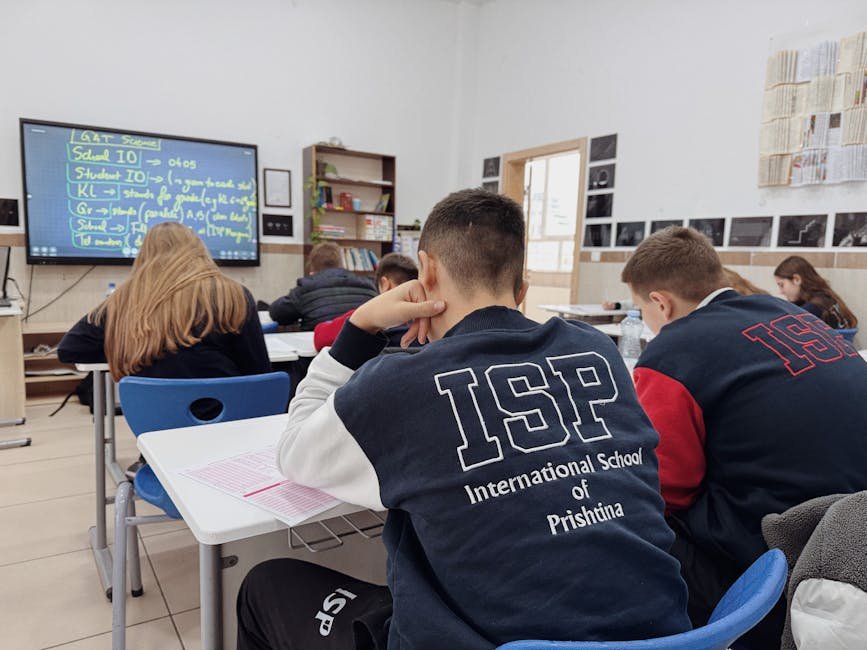 Photo: Pexels / This And No Internet 25
What AP is
Advanced Placement is the advanced coursework track within the American high school system. In grades 11 and 12, students pick the AP subjects that interest them (most take four to eight) and sit the standardized AP exams. AP is an advanced option inside the high school program rather than a diploma in itself, submitted to universities together with the high school transcript and SAT/ACT scores.
Where AP is genuinely strong
- Complete freedom to combine subjects: students choose what to take, and science, social science and arts students each have their own path
- The most natural route to the US: top US universities already evaluate applicants on AP, GPA and SAT/ACT
- The most forgiving: a poor result in one subject has relatively little impact, and there are more chances to make it up
The limits of AP
- Weaker for non-US universities: Oxbridge, Australia’s Group of Eight, and NUS / NTU in Singapore are more at home with A-Levels or the IB than with AP
- A heavy load on the family: American-style applications reward extracurriculars, community service and leadership, and building that profile takes time from the whole family
- Subject choices need designing: pick the wrong subjects, too few, or not enough depth, and the university application looks thin
Children it suits
- Families whose university goal clearly points to the US
- Families who have time to support extracurricular and leadership activities
- Children with a clear area of interest they want to go deep in
- Children with above-average self-management (not the extreme the IB demands, but not too passive either)
5. IB vs IGCSE vs AP side by side
| Dimension | IB (IBDP) | IGCSE / A-Level | AP (American) |
|---|---|---|---|
| Teaching philosophy | All-round development, self-directed exploration | Clear structure, exam-driven | Flexible combinations, emphasis on soft skills |
| Number of subjects | 6 subjects + 3 core components | 3 to 4 subjects in depth | Typically 4 to 8 AP courses |
| Self-discipline required | Very high | Medium | Medium-high |
| Visibility of progress | Lower (mainly self-managed) | High (mock exams show it) | Medium (GPA and AP viewed separately) |
| University fit | Accepted everywhere | Strongest for the Commonwealth | Strongest for the US |
| Suits a child with a subject bias | No, breadth is compulsory | Yes, can specialize in 3 to 4 subjects | Yes, self-chosen combination |
| How much parents can step in | Low (the child runs it) | Medium-high | Medium |
| Typical pressure pattern | Sustained high pressure for 2 years | Concentrated at IGCSE finals and the second A-Level year | Spread out, but soft skills are a long-term build |
6. Three questions to tell which system fits your child
You do not need to research the six IBDP subject groups or how to choose three A-Levels yet. Start with these three questions to narrow the direction:
Q1: Does your child plan for themselves, or need structure and a push?
Before you answer this yourself, ask your spouse. The two of you may see your child differently.
- Plans for themselves → consider the IB
- Needs structure and a push → IGCSE / A-Level
- Somewhere in between, with a clear area of interest → AP
My take: Do not answer this one with hope. “I hope my child is self-disciplined” and “my child is self-disciplined” are two different things. A useful test: “Over the past six months, with nobody checking, did your child finish what needed doing on their own?”
Q2: Is the university goal clear, and where does it point?
- Clearly the US → AP (the most direct route)
- Clearly the Commonwealth (UK, Australia, Hong Kong, Singapore) → IGCSE / A-Level
- Not decided yet, or you want to keep several countries open → IB
Q3: Does your family want to see progress, or are you willing to hand over the wheel?
- Parents want to stay in the loop and know where things stand → IGCSE / A-Level
- Parents are willing to step back and trust the child → IB
- Parents are willing to help build extracurriculars and soft skills → AP
After all three questions, the choice usually narrows to one or two systems. Do not tour all three and then compare fees. Choosing that way almost never works.
My take: One more variable is the age your child starts. Younger children (under 10) adapt easily, and switching systems later is relatively manageable. A child entering an international school at 13 or older faces strict English requirements, and switching after choosing the wrong system is very painful. The older the child, the more carefully the system decision needs to be made. I cover entry age and English requirements in Section 5 of the complete guide to international schools in Malaysia.
Frequently asked questions
Q1. Do we have to decide on a system before grade 11?
Not necessarily. Ages 13 to 14 (the start of IGCSE, or two years before the IBDP) are the last real window for the decision. Before that, the system matters less, because in the primary years (ages 6 to 11) Malaysia’s international schools use fairly similar early-years frameworks (PYP, Cambridge Primary, American Elementary). The differences are mainly in the pace of the teaching language and in the parent culture. The real split comes after 13.
Q2. Can a child switch systems partway through (for example, from IGCSE to IB)?
Technically yes, in practice it is painful. Each system has a different syllabus and a different grading logic, so switching effectively resets one or two years of progress. In the successful switches I have seen, the child needed at least six months to a year to catch up. That is why choosing correctly at the start saves time.
Q3. Can all three systems be found at international schools in Malaysia?
Yes. The main international schools in KL (ISKL, GIS, Alice Smith, Mont’Kiara International, Sayfol, IGB International, Tenby, Sri KDU) broadly cover all three. Some run a single system (Mont’Kiara International School, for example, is an IB school), while others run several side by side (ISKL, for example, offers both AP and IB). Decide on the system first, then choose the school. Doing it the other way round leaves you going in circles between school brands.
Q4. How much do fees differ between the three systems?
Fees depend mainly on the tier of the school, not the system. At schools of a similar tier, IB, IGCSE and AP fees usually differ by less than 10%. The real cost difference is the extracurricular load: AP has the highest time cost for the family because of the extracurricular profile, while the IB demands the heaviest time investment from the child because of its intensity. I break down the hidden costs in the true annual cost of international school.
Q5. My child attended a bilingual school back home. Their English is decent but not native level. Can they go straight into the IB?
It depends on age. Before 13, many schools allow a bridging period (intensive ESL classes alongside the main program). After 13, most international schools require a pass in all four skills (listening, speaking, reading and writing), and forcing a way into the IB carries more risk. My suggestion: if your child is over 13 and their English is not there yet, set aside 6 to 12 months of intensive English as a bridge. Get the English solid first, then talk about systems. (This reflects conditions in early 2026; check each school’s website for current entry requirements.)
Want to go further?
This article deals with the first question: how to choose a system. If you already have a direction, these are the next things to read:
- The overall school selection framework → Complete guide to international schools in Malaysia (covers guardian passes and dependants’ visas, the main school districts and fee bands)
- Budget planning → The true annual cost of international school (fees, extracurriculars and exchange rates)
- Where to live → School first, then neighborhood (the practical logic of choosing the school before the area)
For more like this: our LINE community, YouTube channel "Hi 我是David" (in Mandarin), or email david.lai@xinwaycapital.com.