
International Schools in Malaysia: A 2026 Guide for Families
Published Updated
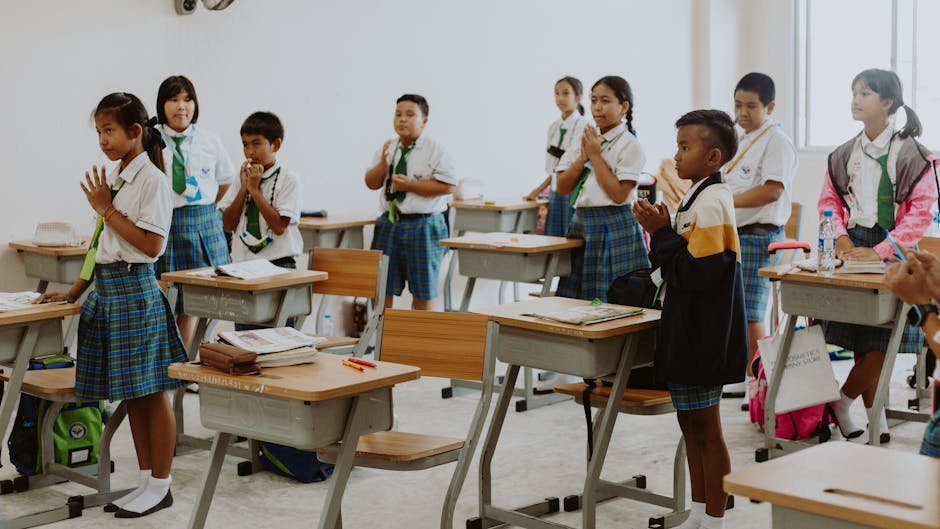
Most relocating families do not go wrong on the school itself. They go wrong on the order: they sign a lease and then look for a school, or they pick a curriculum and only then discover how their child actually learns. This guide to international schools in Malaysia is about that order: where do relocating families most often go wrong, and how do you put school, neighborhood, visa and budget decisions in the right sequence?
I look at it from the property side. Since 2021 my work has centered on property management in Kuala Lumpur, after a real estate career that started in 2014, and many of the families in the buildings I manage moved here for their children’s schooling. I am not a parent, so what follows is built from what I have seen across more than a hundred client families rather than from raising children of my own.
Contents
- The first trap: choosing a curriculum before you know your child
- Curricula compared: IB, IGCSE, AP, American and British
- Choose the school first, then the area: KL’s main school districts
- School fees and the two hidden costs most often underestimated
- Admission requirements, age and adaptability
- Visas for the accompanying parent: guardian, dependant and MM2H passes
- Moving back to a home-country school system
- Frequently asked questions
The first trap: choosing a curriculum before you know your child
Among the clients I have worked with, the biggest mistaken expectations about international schools almost always share one root: parents chose a curriculum before they really understood their child’s personality.
The biggest difference between Malaysia’s international schools and more traditional, teacher-led education is the emphasis on independence. It is not “the teacher talks, the students listen”. Children are expected to plan, research and take responsibility for their own learning. This cultural shift is relatively easy for younger children aged 6 to 9. The older the child, and the longer they have spent in a traditional system, the more adjustment it takes.
And even among “international schools”, teaching styles vary widely between curricula. The most painful case I have seen went like this: parents heard that “IB is the broadest and the most widely accepted by universities worldwide” and enrolled their child straight into the IBDP.
My take: The IB (especially the IBDP at upper secondary level) is broad, but it demands a very high level of self-discipline and planning from the child. One client’s child was the “needs to be pushed” type. They chose the IB anyway, and in the first year the child buckled under the pressure and their grades fell across the board. For the family it turned into a genuine nightmare.
So before you start comparing schools, ask yourself one honest question: is your child the “plans on their own” type, or the “needs structure and a push” type? The answer decides which curriculum you should look at first.
Curricula compared: IB, IGCSE, AP, American and British
My conclusion up front: from age 6 to 11, in the primary years, the curriculum makes relatively little difference. What really shapes university applications, and where families most often choose wrongly, is the stage after age 12.
British (IGCSE, then A-Level)
- IGCSE exams at 14, then A-Levels (a two-year program) from 16
- Strength: the standard route to top universities in the UK, Australia, Hong Kong and Singapore
- Learning style: clear structure, exam-focused, well-defined progress
- Suits: children who need structure and clear goals; families firmly aiming at Commonwealth universities
IB (International Baccalaureate)
- The IB Diploma (a two-year program) from 16: 6 subjects plus Theory of Knowledge and the Extended Essay
- Strength: widely accepted by universities, valued from the US Ivy League to leading universities in continental Europe
- Learning style: broad and diverse, emphasizes self-directed exploration, needs strong time management
- Suits: all-rounders who are self-disciplined, can plan for themselves and can handle pressure
- I have to be honest: the IB is not something to choose simply because it is “the strongest”. For a child with the wrong temperament, the IB can be crushing.
American (AP)
- Four years of high school with elective AP courses, aiming at the SAT or ACT
- Strength: the most natural route to US universities
- Suits: families clearly on the American track, with a child who can manage themselves
How to choose, in the order I recommend:
- Start with your child’s personality: self-disciplined and able to plan, IB; needs structure and goals, IGCSE; somewhere in between, American
- Then look at the university goal: no clear goal yet, choose IB to keep the most options open; clearly heading to the Commonwealth, IGCSE and A-Level; clearly heading to the US, AP
- Finally consider family background: if the family has American, British or Canadian ties, following that heritage is usually the smoothest path
Reversing the order (choosing the university goal first and considering the child’s personality last) is where many families go wrong.
Choose the school first, then the area: KL’s main school districts
I need to stress this order: families relocating for schooling should settle on the school first, then decide where to live.
The reason is simple. You are coming so that your child can learn and grow well. Since different curricula suit different children, you should first find the school that best fits your child, then look at housing near that school.
A common mistake in the order goes like this: a friend recommends Mont Kiara and you hear many people from your home country live there, so you decide to live in Mont Kiara, then pick a school near Mont Kiara. The problem is that the curricula of schools around Mont Kiara may not suit your child, but you have already signed a lease, so you end up settling for second best.
The overview below is for after you have found the right school, so you understand what living in each area is like:
Mont Kiara: an established international school hub
- Nearby schools: Garden International School (GIS), Mont Kiara International School (MKIS)
- Area profile: dense Japanese, Korean and other East Asian communities, the widest choice of condominiums, convenience stores and restaurants within walking distance
- Living experience: accompanying parents will not feel isolated; expat circles from many countries and languages (Mandarin-speaking families, for example) are well established
Desa ParkCity (DPC, west of Mont Kiara): a fully planned township
- Nearby schools: The International School @ ParkCity (TISP), within walking distance
- Area profile: comprehensive planning, a strong community feel, pet friendly, a lake and park
- Living experience: the kind of community where “the whole family moved together and nobody regrets it”
Sri Hartamas (south of Mont Kiara): the value option
- Nearby schools: within reach of the Mont Kiara and DPC schools (you can also commute to the ISKL main campus in Ampang)
- Area profile: more affordable than Mont Kiara and DPC, a slightly lower share of foreign residents
- Living experience: suits families who need to stretch the budget and are comfortable with a more local way of life
TRX (KL’s new financial district): work comes first
- Nearby schools: commute to ISKL, Sayfol and others
- Area profile: mainly offices, new condominiums, next to an MRT station
- Living experience: suits families where one parent works in KL and wants to walk to work, and who accept a 15 to 20 minute drive to school for the children
Ampang (east KL): home of the ISKL main campus
- Nearby schools: The International School of Kuala Lumpur (ISKL) main campus, Sayfol
- Area profile: a traditional embassy district, many expat families, a slower pace of life
- Living experience: suits families whose life revolves around the school
My take: Housing types, management quality and the share of foreign residents vary greatly between these areas. In 12 years in property (based in KL since 2021), I have never seen a family that chose the area before the school not want to move partway through. Get the order right and you will save yourself far more trouble than you expect.
School fees and the two hidden costs most often underestimated
 Image: Pexels / Đan Thy Nguyễn Mai
International school fees in Malaysia span such a wide range that it hardly looks like one market: from RM 15,000 to more than RM 130,000 a year (about US$3,700 to US$32,000), a gap of almost nine times.
Below are rough positions by tier. For exact figures, rely on each school’s official website and its latest 2026 announcements (I suggest going directly to the school website, or checking an international school database such as International Schools Database):
| Tier | Example schools | Annual fee range | Area |
|---|---|---|---|
| Top | ISKL, Alice Smith, Garden International | RM 80k+ to 130k+ (about US$20,000 to US$32,000+) | Ampang / Equine / Mont Kiara |
| Upper middle | MKIS, TISP (DPC) | RM 60k to 100k (about US$15,000 to US$25,000) | Mont Kiara / DPC |
| Middle | ELC, Kingsley | RM 40k to 70k (about US$10,000 to US$17,000) | Sungai Buloh / Putra Heights |
| Entry | Sayfol and others | RM 25k to 50k (about US$6,000 to US$12,000) | Ampang |
These ranges are broad. Fees differ greatly by level (primary, secondary, upper secondary) and rise every year.
The two hidden costs most often underestimated
First, extracurricular and miscellaneous fees.
Fee structures differ between schools. Some schools are all-inclusive; others charge separately for extracurricular activities, clubs, overseas trips and competition entries. I have seen families budget for tuition only and end up spending 20% to 30% more in the first year. Beyond tuition, ask clearly in advance about:
- Uniforms, materials, lunch, school bus (essential costs)
- Extracurricular / co-curricular activities (charged separately at many schools)
- Overseas exchanges and academic competition entry fees
- Facility fee / development levy (one-off, common for new students)
- Refund policy (how much do you get back if your child leaves mid-year?)
Second, currency movements.
This is what parents paid in another currency most easily overlook: you pay fees in ringgit, but your income is in another currency.
My take: In 2025, the ringgit rose 10.2% against the US dollar (Bank Negara Malaysia). For parents whose budget was set “just right”, that is a significant extra cost: a school budgeted at a fixed amount in your home currency suddenly costs more than 10% more. For families staying several years, the cumulative effect of exchange rates can be equal to paying for an extra term.
My advice: budget at 110% to 115% of the upper estimate, not exactly to the figure. Exchange rates do not move in one direction forever, but you cannot assume they will work in your favor.
Admission requirements, age and adaptability
Each school sets its own requirements, but the standard process looks roughly like this:
- Submit an online application (including report cards, reference letters, passport and visa page)
- Entrance assessment (primary: basic ability tests and an interview; secondary: written tests in English, math and science)
- Parent interview (often overlooked, but key at top schools)
- Offer letter and deposit
- Enrollment and visa processing
On age: the younger the child, the lower the bar
I have to be realistic: admission to international schools in Malaysia is currently competitive, especially at the top schools. Older children whose English is not yet at a certain level are turned away outright.
My take: I usually advise parents that “the earlier you come, the better”. Not because international schools discriminate against older children, but because schools look at adaptability when admitting. The younger the child, the more adaptable they are, so schools are more lenient on English because they know the child will catch up quickly in the school environment.
Older children (13 and above) are a completely different case:
- English must reach a set level before they are admitted (listening, speaking, reading and writing must all pass)
- The math and science written tests are close to the standard of that year group
- The interview asks the child directly “why do you want to attend this school?” A 10-year-old can be vague; a 14-year-old who cannot answer is read as lacking motivation
The three things that most often trip up children transferring from a local-language system (especially in the upper grades):
- Writing in English: listening, speaking and reading are fine, but thinking through academic subjects in English is the hurdle
- Math conventions: unit conventions, notation and the way working is set out can differ between systems, and it takes a term or so to adjust
- Explaining their motivation at interview: a child who cannot say why they want to attend is read as coming from a family that is not prepared
If your child is 13 or older and their English is not there yet, allow at least 6 to 12 months of bridging time for intensive English preparation before sitting the assessment. Forcing it usually fails, wastes the application fee and knocks the child’s confidence.
Visas for the accompanying parent: guardian, dependant and MM2H passes
To be clear: there is no official visa called a “study mother visa”, even though the term is widely used. Depending on the family’s situation, the accompanying parent usually holds one of three kinds of status:
Guardian pass (a Social Visit Pass): for the parent or guardian of a Student Pass holder
- Prerequisite: the child holds a Student Pass to attend a school in Malaysia
- The parent holds the guardian pass and can reside in Malaysia while the child studies
- A guardian pass holder cannot work in Malaysia
Dependant’s Pass: for the family of an Employment Pass holder
- Prerequisite: one parent (for example, the father) holds an Employment Pass
- The spouse and children hold Dependant’s Passes linked to that Employment Pass
- A Dependant’s Pass holder cannot work in Malaysia unless separate permission is obtained
MM2H and PVIP dependants: for families on Malaysia’s long-term residence programs
- The principal applicant holds MM2H or PVIP; the spouse and children are included as dependants
- When a child reaches adulthood their status needs reviewing (student pass, work pass or their own status), so check the program’s current rules
Typical visa combinations for relocating families
| Family situation | Father’s pass | Mother’s pass | Child’s pass |
|---|---|---|---|
| One parent keeps working at home, the other comes with the child | (none, not relocating) | Guardian pass (a Social Visit Pass) applied for through the child’s Student Pass | Student Pass |
| One parent comes to work in Malaysia | Employment Pass | Dependant’s Pass | Dependant’s Pass |
| Whole family on MM2H | MM2H principal applicant | MM2H dependent | MM2H dependent |
| Whole family on PVIP | PVIP principal applicant | PVIP dependent | PVIP dependent |
My take (as a PVIP holder): For families who want a long-term, flexible arrangement that is not tied to a job, MM2H or PVIP (Premium Visa Program) is a cleaner route than a Dependant’s Pass. A Dependant’s Pass depends on the spouse: if the spouse’s pass ends, the whole family has to reapply. MM2H and PVIP give you independent status, which is much safer. That is exactly why I hold a PVIP myself: your residency status should be in your own hands, not tied to someone else’s employment contract.
Moving back to a home-country school system
Since I put down roots in Malaysia in 2021 to work in property management, I have seen quite a few families move here, study for a while, then move back home. I want to look at this from a neutral angle:
Moving back to your home-country system is not a failure.
Families who make this decision usually do so for one of two reasons:
- Planning for university at home: for families aiming at their home country’s top universities (for example, Taiwan’s leading national universities), the most direct route is often still the domestic school system
- Prioritizing the home language: a child who has grown up in an English environment may fall behind in their first language, and parents feel that foundation needs to be solid before English
My take: Every education system has room for improvement, but you cannot dismiss a whole system with one sweeping judgment. Some children’s learning styles, family goals and future plans simply suit their home system. I suggest parents treat “international school” and “home-country system” as two tools, not as “progressive versus backward”. Use whichever tool fits your child.
If your family decides to move back, plan two things early:
- Recognition of grades: how schools at home assess report cards from a Malaysian international school varies from school to school. Before transferring, ask your target school how it treats them
- First-language support: if your child has spent 3 or more years in an all-English environment in Malaysia, arrange intensive first-language tutoring during the summer before you return, or the first two months of the new term will be hard
Frequently asked questions
Q1. Which international school is best for families from my country?
I would never simply answer “ISKL is the best”. What fits best depends not on nationality but on your child’s personality and your family’s goals. The order is: work out whether your child needs room for self-directed planning or needs structure and a push, match that to IB, American or British, then filter schools within that curriculum. Only then choose where to live, not the other way round.
Q2. How do I choose between IB and IGCSE?
My order: start with your child’s personality: strong self-discipline, IB; needs structure, IGCSE and A-Level. Then the university goal: no goal yet, IB to keep options open; clearly the Commonwealth, IGCSE; clearly the US, AP. Finally family background. The IB is a good system but the pressure is real. If your child is not the type who can carry the load and plan for themselves, forcing the IB will be painful.
Q3. Can the accompanying parent work in Malaysia?
Neither a guardian pass nor a Dependant’s Pass by itself allows work. There are two routes to working legally: (1) apply separately for an Employment Pass (you need to be hired by a local company), or (2) go the MM2H route and then apply for a part-time work permit. In practice, many accompanying parents keep working remotely for an employer in their home country while living in Malaysia, with the salary paid into a home-country account. This is a grey area, so check the immigration and tax position with a professional before relying on it.
Q4. Are international schools in Malaysia cheaper than elsewhere?
Comparing top tier with top tier, Malaysia is not necessarily cheaper: in my experience, the total cost of KL’s top international schools (ISKL, GIS, Alice Smith) can come close to that of leading bilingual and international schools in other Asian cities. In my experience, where Malaysia offers real value is the middle tier: schools in the RM 50,000 to 80,000 range (about US$12,000 to US$20,000) offer a British-curriculum education that is hard to find at that price in many other places. One more point: do not forget currency movements. The ringgit rose 10.2% against the US dollar in 2025, so budget at 110% to 115% of the upper estimate rather than exactly to the figure.
Q5. Does transferring mid-way require an entrance test?
Yes. Every international school runs an entrance assessment, wherever you are transferring from: another international school abroad, Singapore or Hong Kong, or another school in KL. Everyone is tested again. The difficulty depends on the year group; the higher the year, the more it resembles a formal entrance exam (written tests in English, math and science plus an interview). The older the child, the stricter the English requirement.
For more like this: our LINE community, YouTube channel "Hi 我是David" (in Mandarin), or email david.lai@xinwaycapital.com.