
Malaysia Property Investment: Prices Do Rise, Just Very Unevenly
Published Updated
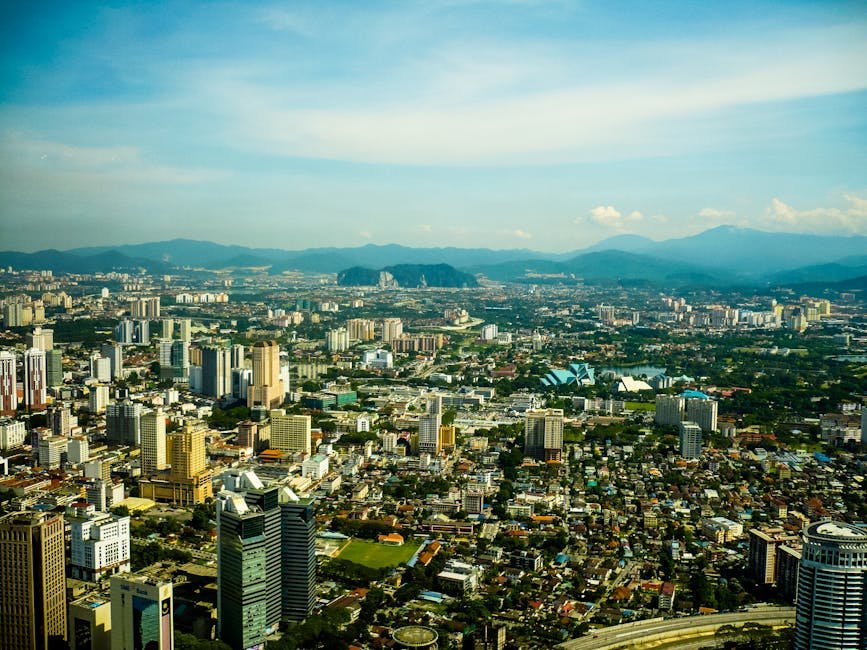
“Malaysian property hasn’t really moved in ten years.”
I have heard this many times. The first time, I thought the speaker meant the whole market. Later I realized the people who say it have usually bought one particular kind of property.
In my experience, in the same city and over the same period, some owners exited with gains of 40% to 60%, while others were stuck for ten years with almost nothing to show. What separated them was mostly which property they chose, and luck played a smaller part than people think.
Contents
- “The market isn’t rising” is only an average
- Two core factors behind uneven price growth
- Why condominiums find it especially hard to appreciate
- Four structural reasons big long-term gains are rare
- A framework for choosing property in Malaysia
- Frequently asked questions
“The market isn’t rising” is only an average
Malaysia’s official housing statistics (the national house price index) have risen only slowly in recent years and were close to flat in 2025. Many people draw a conclusion from this figure: “Malaysia isn’t a place to invest in property.”
That conclusion comes too fast.
The national index blends every product, every region and every property type into a single average. If good properties rise 50% and poor ones fall 20%, the average comes out at 15%, which sounds unremarkable. But if you hold only the one that rose 50%, it feels very different.
I have 12 years of hands-on property experience and manage more than a hundred properties in Kuala Lumpur. The differences in occupancy, transaction prices and resale speed between two buildings on the same road are sometimes far larger than you would expect. The Malaysian property market is not one solid block. It is a set of highly fragmented local markets.
Two core factors behind uneven price growth
Location of the land
This is the bedrock.
Land itself does not depreciate, but the density of urban development around it changes. Where transport lines extend, where commerce concentrates and where government infrastructure lands decide a location’s long-term appeal.
The clearest example in KL over the past 10 years is property along the MRT lines. In the cases I have followed, some properties near stations from 2015 to 2016 commanded a clear premium in the resale market after 2020. Not because “the whole market rose”, but because transport infrastructure lifted the relative position of those locations.
The key question is not “is this location good now?” but “where will this land’s place in the city be in 5 to 10 years?”
Product type and substitute competition
A defining feature of Malaysia’s condominium market is that it is extremely homogeneous.
A unit of 700 to 900 sq ft (about 65 to 84 m²) with 3 bedrooms, renting at RM 2,500 to 3,500 a month (about US$620 to US$860), has dozens of substitutes in most mature areas of KL. Buyers and tenants have plenty of choice, and a consensus on price is hard to form.
By contrast, scarce properties (for example, detached houses on particular roads, the rare freehold property within a land-exempt zone, or commercial property in a unique location) are hard to replace, so their prices have more room to move.
The more substitutes there are, the more a property’s price is held down by the market average.
Why condominiums find it especially hard to appreciate
This is something many foreign investors do not think through before buying.
Malaysian developers launch condominium projects quickly, especially around KL. As new projects keep coming, the appeal of older units is steadily diluted.
Think about the logic: if I own a condominium built in 2015, and the project next door, completed in 2024, has better facilities, a newer layout and a more modern look at the same size, which one will a tenant choose?
The result is that owners of older units have to offer discounts to rent them out, and over time rental yields are squeezed.
Three conditions that erode a condominium’s long-term value:
| Condition | What it means |
|---|---|
| Building age | Appearance, facilities and management costs all move in the wrong direction |
| Rising maintenance and management costs | Lift repairs, facade waterproofing and refurbishing common facilities all need to be funded from service charges |
| Slow resale liquidity | With many substitutes in the same area, buyers wait for you to cut the price; if you don’t, they wait for the next one |
My take: Among the properties I manage, condominiums more than 15 years old take on average 1.5 to 2 times longer to fill a vacancy than new projects in the same area. Tenants’ choice is simple: why not live somewhere newer for the same rent? Unless the location has irreplaceable scarcity, older condominiums really are losing their competitive edge.
Four structural reasons big long-term gains are rare
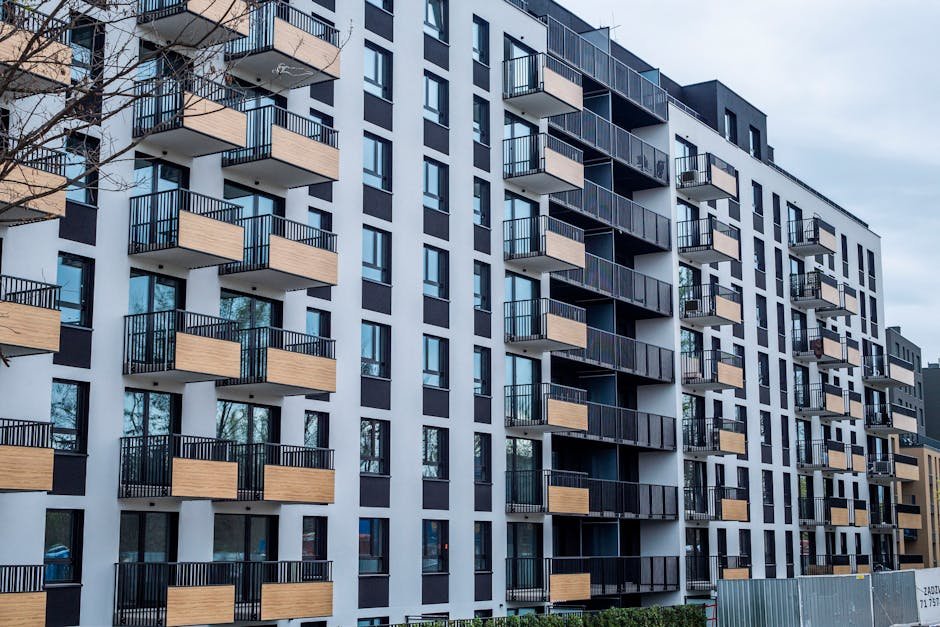 Image: Pexels / SHOX ART
This is a macro analysis of the Malaysian property market as a whole, not of any particular property.
Supply keeps the lid on prices
Developers never stop launching. Malaysia’s policy controls on property development are relatively loose and land supply is ample, so the pace of launches keeps constant pressure on the supply side of the market.
Products are highly substitutable
As above: almost every condominium has a substitute, so buyers rarely feel “it has to be this one”.
Holding costs and liquidity add double pressure
- Holding costs: service charges, maintenance, furniture depreciation and agent fees add up; a 5% headline yield often leaves only 1.5% to 3% net
- Liquidity: compared with faster-moving resale markets elsewhere, comparable properties in Malaysia take longer to resell, and in a downturn you may not find a buyer for six months
Market expectations are conservative, so buyers don’t chase prices
Local Malaysian buyers have no collective memory that “property prices only go up”, so expectations are conservative to begin with. When buyers don’t chase prices, sellers who ask high cannot hold their price, and deals settle toward the middle. This feedback loop makes big rallies hard to sustain.
My take: This does not mean Malaysian property is not worth buying. It means the strategy has to be different. The passive logic many buyers bring from markets with long bull runs, “buy and wait for the market to carry you up”, almost never works in Malaysia. You need to choose assets actively, rather than expecting the market to do the work for you.
A framework for choosing property in Malaysia
If you can’t rely on the market as a whole, you have to rely on selection. Here is the screening framework I have built from 12 years of hands-on property work:
First layer: scarcity of location
- Is this location on the city’s growth path?
- Does it have something that cannot be replicated: a transport node, a special planning zone, a commercial anchor next door?
- Will that still be true in 5 years, or will the advantage be diluted?
Second layer: competition from substitutes
- How many similar products are there in the same area?
- Are new projects launching quickly?
- What does your property have that a new project cannot replace?
Third layer: is the holding structure sustainable?
- After service charges, amortized maintenance and estimated vacancy, is the monthly net cash flow positive?
- If it went unlet for 2 years, could you hold on?
- Exit liquidity: how often do similar properties change hands in the resale market?
My take: I use these three layers together with one sentence: “Cheapness on its own has never been value. What matters is whether there are conditions supporting the price.” Many people buy because it looks very cheap compared with home, without checking what supports the price. In that case, cheapness is only the entry ticket, not a reason to win.
How I screen properties for clients in practice
Every time I view properties with a client, I first fill in a quick three-layer scorecard:
| Dimension | Question | Score (1-5) |
|---|---|---|
| Scarcity of location | How much vacant land is left within 1 km? | |
| Scarcity of location | Where will this location’s place in the city be in 5 years? | |
| Competition from substitutes | How many properties of the same type and price are in the area? | |
| Competition from substitutes | Are new projects launching quickly? | |
| Holding structure | Is monthly cash flow positive after holding costs? | |
| Holding structure | How often do similar resale properties trade? |
Only if the average across the three layers is 3.5 or higher do I go on to build a financial model. My principle: better not to buy at all than to buy a property whose advantage you cannot clearly explain. Once you own it, what will you use to convince the next buyer? That question needs an answer while you are still viewing.
Frequently asked questions
Q1. Does Malaysian property really perform worse over the long term than other markets?
That comparison doesn’t hold up. Markets that saw big price rises over the past 15 years did so because of a particular mix of policy, currency, supply and demand, and even those markets have plenty of owners stuck with poor properties, hidden by a rising average. Malaysia’s pattern of uneven growth means those who choose well do not lose out, and those who choose badly lose more heavily. The point is the choice, not the market.
Q2. Are cities outside KL (Penang, Johor Bahru, Melaka) worth buying in?
Each city has its own supply and demand structure. Penang has relatively limited condominium supply and scarce land, so its gains are steadier; Johor Bahru benefits from the Johor-Singapore Causeway and overflow demand from Singapore, and follows its own logic; other cities have poor rental liquidity, which makes investing harder. But the framework is the same: scarcity of location, product competition and holding structure, whatever the city.
Q3. What type of property is safest for a foreigner to buy?
From the angle of avoiding traps: first choice, scarce freehold landed property; second, condominiums in locations backed by transport or commerce; avoid development areas with a serious oversupply (especially some high-rise condominium belts around KLCC). Foreign buyer thresholds vary by state, so before committing, confirm that the property type is within what foreigners may buy. For the rules, see the foreign buyer property threshold by state.
Q4. Is the logic the same when buying to live in and buying to invest?
No. For a home, what matters most is “does it add value to my life?”; for an investment, it is “will someone buy it from me when I exit?”. As an owner-occupier you can accept a slightly weaker location (because you live comfortably); as an investor you cannot. If you buy a property that is comfortable to live in but hard to resell, do not expect an investment return.
Q5. The ringgit is volatile. Should I wait for it to reach a certain level before buying?
Exchange rates are very hard to predict, and I do not recommend timing your entry or exit by waiting on the currency. A more useful logic: if your income is in US dollars or another currency, you plan to hold Malaysian assets for the long term, and your currency is currently strong against the ringgit, the present rate works in your favor. But the exchange rate is only a reference for timing, not a reason to choose a property.
Want to dig deeper?
- How to calculate yield (including holding costs) → The real logic of rent covering the mortgage in Malaysia
- Land or building: which holds the value? → Malaysian property: land holds the value
- Understand the rules before choosing a property → Complete guide to buying property in Malaysia
For more like this: our LINE community, YouTube channel "Hi 我是David" (in Mandarin), or email david.lai@xinwaycapital.com.