
Malaysia Property: The Land Holds the Value, Not the Building
Published Updated
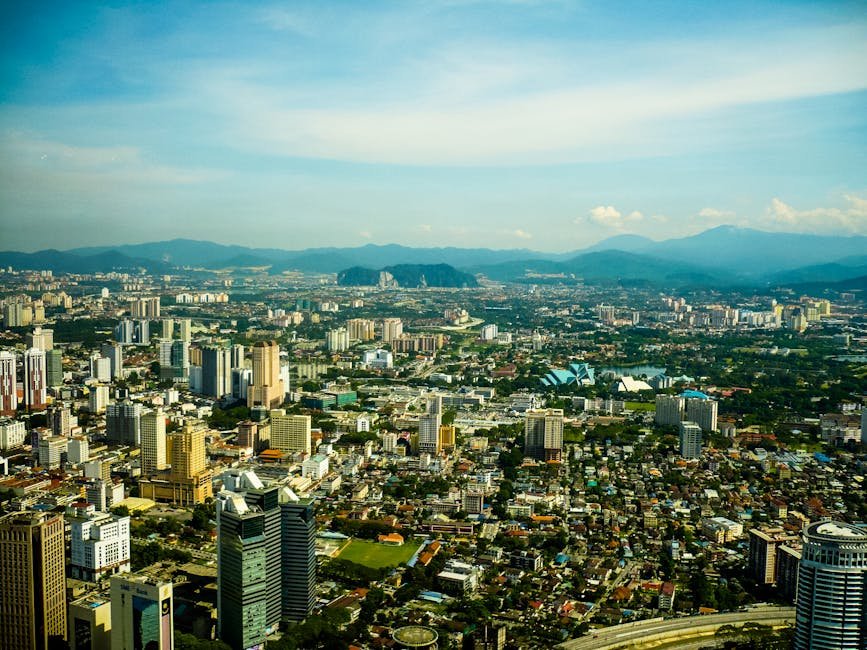
You often hear that “Malaysian property hasn’t gone up in 10 years.” The statement is not entirely wrong, but almost every conclusion people draw from it is.
Malaysian property has not stood still as a whole. Price growth is uneven. Which side of that divide you end up on depends on whether you understand one thing: what you pay for, underneath the home, is the right to use a piece of land.
Land does not depreciate. Buildings do. Malaysia has a large supply of condominiums and new launches come quickly, so an older building loses much of its appeal after 5 to 10 years. What really holds long-term value is the land, not the tower on top of it.
This article walks through that logic: why it is the right way to think, what kind of property sits on land with real value, and how the judgment differs for owner-occupiers and investors.
Contents
- Land vs building in Malaysian property: why the investment logic runs the other way
- Three conditions that erode a building’s value
- How to judge whether Malaysian land has long-term value
- Owner-occupiers and investors think differently
- In practice: three real decision scenarios
- Frequently asked questions
1. Land vs building in Malaysian property: why the investment logic runs the other way
A simple fact
In any country, the price of real estate is made up of land plus building. Only the proportions differ.
- KL mid-market condominium areas (my estimate): land is 30% to 45% of the value, the building 55% to 70%
Notice the proportions. In land-scarce prime districts of major cities, land typically makes up most of the price. In a mid-market KL condo, the building is the larger share.
What this means
When you buy a KL condo, an unusually large share of what you pay for is the part that depreciates. If the land itself has no premium to grow into and the building alone has to carry the value, the price is very likely to be lower five years later.
My take: Many buyers purchasing their first property in Malaysia focus entirely on how good the unit looks: the furnished show unit, the kitchen island, the infinity pool, the gym. It feels like a good deal at the time of purchase. Five years later the new project next door has better facilities at a similar price, and your unit has become last season’s model. The long-term support comes from the land underneath the building, not from the building itself.
Why buyers from land-scarce cities get stuck
Many buyers arrive with the instinct that “a new launch is safe, and a furnished unit saves effort.” That instinct works in cities where land is scarce, because land scarcity absorbs the building’s depreciation. KL has plenty of condo supply, so the same instinct can lead you to a property where the land contributes less than 40% of the value, and then you wait while depreciation eats into your room for capital gains.
2. Three conditions that erode a building’s value
Buildings age quickly
Taken together, the design, construction methods and maintenance intensity of Malaysian condominiums mean buildings tend to age quickly:
- Within 5 years the exterior starts to look worn (the Southeast Asian climate plus how often the facade is cleaned)
- At 10 years the common areas (lobby, pool, lifts) need major repairs
- At 15 to 20 years the whole building commonly starts to feel old
Maintenance costs rise year after year
- The building’s sinking fund is usually healthy at the start, then gets drawn down by one major repair after another
- The owners’ general meeting votes on whether to upgrade equipment (lifts, central air-conditioning). Most buildings end up compromising on minimum-cost repairs, so the equipment ages without being upgraded
- After 10 to 15 years the building starts needing major repairs every year, and maintenance fees go up
Resale liquidity is slow
The secondary market for Malaysian condominiums is thin:
- Many sellers and relatively few buyers
- Several units on the same floor or with the same layout are often listed at once, undercutting each other
- Buyers prefer something newer, so older projects get passed over
My take: Among the properties I manage, resale condos more than 10 years old often only sell at a 15% to 25% discount, while there is always a newer option nearby. That is the normal state of the KL condo market, not bad luck with one building.
Owner-occupiers and investors are affected differently
- Owner-occupiers: you live there for the long term with no plan to sell, so depreciation affects your day-to-day experience only to a limited (acceptable) degree
- Investors: you expect capital gains and rental income over 5 to 10 years, so depreciation hits your return directly
That is why owner-occupiers and investors need different decision logic, which the next sections cover.
3. How to judge whether Malaysian land has long-term value
“Land value” sounds abstract, but in practice it has three measurable dimensions:
Location
The oldest slogan in property, and still the most important. Specifically, look at:
- Within a 5-minute walk of an MRT/LRT station → a long-term land premium
- Within a 5-minute drive of a main road or highway → both commercial and residential demand
- Near top international schools, major hospitals or concentrations of offices → anchored, essential demand
The counter-example: many new projects on KL’s outskirts advertise “an MRT station coming in future,” but “future” can mean nothing happens for 5 to 10 years. When you buy, you cannot assume the future will arrive.
Scarcity
This dimension is harder to quantify, but it decides long-term land value:
- Competing supply: how many more condos can still be built nearby? 10 towers of 500 units versus 2 towers of 100 units is 25 times more competing units
- Developable land: how much empty land is left nearby? More empty land means more future supply, which dilutes your property
- Special terrain or setting: seafront, riverside, hill views or lake views, the truly scarce locations that cannot be replicated
My take: The fastest way to judge scarcity is to open Google Earth and look at the 1 km radius around the property. Lots of empty land means future launches will dilute your value. Little empty land means you are already buying one of the last plots, and the land premium will hold steady.
Growth trajectory
Do not look at what the government says it will build. Look at:
- Whether infrastructure work is actually underway (are water mains, the power grid and roads being upgraded?)
- Whether people are moving in (household registrations, school enrollment, the number of restaurants and shops)
- Whether government policy actually favors the area (not a one-off press release)
“Why do some people make money in Kuala Lumpur while others stay stuck for years? Same market, different choices.” For two properties both priced at RM 1,000,000 (about US$246,000), one scoring 8/10 on land and the other 4/10, a 30% to 50% difference in value after 10 years would not be surprising.
4. Owner-occupiers and investors think differently
 Photo: Pexels / Tom Fisk
Owner-occupiers can tolerate building depreciation
If you are buying to live in and do not plan to sell within 10 years:
- Depreciation means your living experience declines year by year, but it is not a cash loss
- What matters is whether the building’s management and maintenance keep up (how proactive the management committee is, how healthy the sinking fund is)
- Even if the land value does not rise, it will not “fall” either, so living comfortably is what counts
→ Owner-occupiers can accept a property where land is 40% of the value, as long as it fits how they live.
Investors must lock in land that supports the value
If you are buying to invest and expect capital gains plus steady rental income over 5 to 10 years:
- Depreciation hits your return directly
- You need a property with a high land share, strong scarcity and a clear growth trajectory
- Better to pass on 10 properties and buy the one where the land is genuinely valuable
→ Investors should look for a land share of 55% or more, which usually means an established prime area rather than an emerging suburb.
My take: When my property management clients first wanted to sell after five years, most of the properties with a land share under 40% lost money, while most of those with a land share of 55% or more broke even or made a small gain. Same market conditions, different location choices, completely different outcomes.
The hybrid model: part owner-occupied, part rented
Many MM2H and PVIP holders are in this situation: they live in the unit 3 to 6 months a year and rent it out the rest of the time. (MM2H is the Malaysia My Second Home long-stay visa; PVIP is the Premium Visa Programme.)
- Choose the property with owner-occupier logic, putting comfortable living first
- Treat rental income as a subsidy for your own living costs, not your main return
- Do not force a mixed-use property into a “rent covers the mortgage” calculation. That math does not work in Malaysia, as I explain in why rent rarely covers the mortgage in Malaysia.
5. In practice: three real decision scenarios
Scenario A: a five-year-old high-rise condo in KLCC vs a new launch in Mont Kiara
- KLCC, five years old: land share about 60%, strong scarcity (no empty land left), steady growth trajectory
- Mont Kiara new launch: land share about 40%, weak scarcity (more construction still going on nearby), growth trajectory depends on MRT progress
Investment verdict: choose the five-year-old KLCC unit. It is “not as new,” but it scores clearly higher on land.
Scenario B: a sea-view new launch in Iskandar at RM 800k vs a mid-market KL strata unit at RM 1.0M
- Iskandar sea-view new launch at RM 800,000 (about US$197,000): land share 50% (the sea view is scarce), plus the RTS Link opening as a catalyst, and a friendlier budget
- Mid-market KL strata unit at RM 1,000,000 (about US$246,000): land share 40% to 45%, moderate scarcity, mature rental market
Investment verdict: neither is bad, but it depends on your holding period and exit goal:
- Exit within 5 years and a bet on the RTS → Iskandar offers the more attractive risk-reward
- Hold steadily for 7 to 10 years while collecting rent → the KL mid-market unit keeps the risk under control
Scenario C: a Penang sea-view unit vs a terrace house on the Penang mainland
- Penang sea-view strata at RM 2,000,000+ (about US$493,000+): extremely scarce land, a hotspot for foreign buyers, moderate liquidity
- Penang mainland terrace house at RM 800,000 (about US$197,000): land share 70%+ (landed), steady local demand, slow liquidity
Owner-occupier verdict: the sea view wins on both experience and appreciation.
Investment verdict: it depends on your horizon. The sea view ties up RM 2,000,000+ of capital, while the terrace house has limited upside but low risk.
Frequently asked questions
Q1. So does landed property (terrace houses, bungalows) always hold value better than strata (condos)?
Structurally, yes. By my estimate, in landed property the land usually accounts for 60% to 80% of the combined value, higher than a condo’s 30% to 45%. But note that (a) landed property sells more slowly (there are fewer buyers than for condos), (b) running costs are higher (you pay for the exterior, roof and garden yourself), and (c) you will not get the level of shared upkeep a large condo community’s maintenance fee buys. Holding value is not the same as being easy to sell, and the two need to be kept apart.
Q2. Established areas vs emerging areas in KL: what do you suggest for investors?
My observation: established prime areas have stable land value but limited upside; emerging areas have low land value but more upside. It is a choice between defense and attack, with no absolute right answer. The risk in emerging areas is that infrastructure the government promised does not materialize for 5 to 10 years, and most emerging areas have been through that. My suggestion: keep 60% to 70% of a portfolio in established areas and 30% to 40% in emerging ones to spread the risk.
Q3. Does that mean the “rent covers the mortgage” calculation no longer matters?
It still matters, but you cannot rely on it alone. A complete assessment has three layers:
- Layer 1: does the land have value? (this decides your room for capital gains over 5 to 10 years)
- Layer 2: can rent cover the mortgage? (this decides your cash flow while you hold)
- Layer 3: how liquid is it? (this decides whether you can exit smoothly)
Only green lights on all three make a good investment. In the Malaysian market, layers 2 and 3 tend toward red, so layer 1 has to be judged more strictly.
Q4. How can I quickly estimate the land share?
In practice no public data hands you the ratio, but there are two ways to estimate it:
- (a) Replacement cost: ask the developer what it would cost per square foot to build the same layout today, multiply by your unit’s square footage to get the approximate building cost, and the rest is land
- (b) Comparison: compare transaction prices of older nearby properties with new launches of the same layout. The gap reflects depreciation plus time
Q5. I am buying to live in, but I may move in 10 years. Should I care about land value?
Yes, but not as strictly as an investor. My suggestion: aim for a land score of at least 6/10, so you do not lose too much when you sell in 10 years. If the score is only 4/10, be mentally prepared to lose 15% to 25% when you sell after 10 years. Knowing this in advance will not necessarily let you avoid it, but at least the decision is yours and not a lesson the market teaches you.
Want to go further?
- The overall buying framework → Malaysia property buying guide
- The real rent-versus-mortgage math → Why rent rarely covers the mortgage in Malaysia
- State thresholds and Malay Reserve restrictions → Foreign buyer thresholds by state in Malaysia, 2026
For more like this: our LINE community, YouTube channel "Hi 我是David" (in Mandarin), or email david.lai@xinwaycapital.com.