
Cost of Living in Malaysia 2026: A KL Family Budget
Published Updated

How much does it really cost a family to live in Kuala Lumpur? For a family of four with two children at a mid-tier international school, my working answer is RM 22,700-37,000 a month (about US$5,600 to 9,100). This is a working handbook for families still deciding whether to move: it places KL among the Asian cities families most often weigh it against, from Singapore and Hong Kong to Tokyo and Bangkok, then goes line by line through where the real costs land, which is a different picture from the usual “KL is cheap” headline.
The figures come from the property side. Since 2021, when I moved my main base to Kuala Lumpur after a real estate career that began in 2014, I have managed homes for more than a hundred cross-border families. That means I see the real bills from the tenant’s side: rent, utilities, cars, domestic helpers and school fees, almost every line item of the cost of living in Malaysia.
The bottom line first: once you add it up, it is not actually cheap. A family of four with two children at a mid-tier international school will spend RM 22,700-37,000 a month (about US$5,600 to 9,100), no way around it. What you get for that is international schooling for your children and an international life for the whole family. That is the real value of moving here, not saving money.
About the data: the price ranges in this article combine three sources: (1) actual bills I have seen from tenants in the homes I manage; (2) the international price database Numbeo (user-contributed, updated monthly); and (3) quotes for the current month that I requested directly from partner banks, insurers and schools. All figures are typical ranges, and individual cases can vary by ±30%.
Contents
- How KL compares with five other Asian cities
- Rent: what three-bedroom condos really cost in Mont Kiara, DPC and TRX
- Food: cooking at home vs eating out vs fine dining
- Transport: buying a car vs using Grab
- Healthcare: private insurance premiums and out-of-pocket visits
- Education: the true annual cost of international school
- Everything else: domestic help, utilities, internet, gyms and entertainment
- Frequently asked questions
1. How KL compares with five other Asian cities
Many families ask me whether KL is cheap. On its own, that question has no answer. It only means something once you use other cities as reference points.
The table below uses Numbeo Cost of Living Index data (New York = 100, rough positions from Numbeo’s 2026 snapshots) for the Asian cities families most often weigh against each other:
| City | Overall cost of living index (New York = 100) | Rent index | Restaurant index |
|---|---|---|---|
| Singapore | about 90 | High | Mid-high |
| Hong Kong | about 75-80 | Very high | Mid-high |
| Tokyo | about 55 | Mid | Mid |
| Taipei | about 50-55 | Mid (poor value) | Mid |
| Kuala Lumpur (KL) | about 39 | Mid-low | Low |
| Bangkok | about 43-44 | Low | Low |
Numbeo is user-contributed and updated monthly, so the index can move by ±10% as the sample changes. For exact figures, check the live data on Numbeo’s KL page.
What it means in practice
On the spectrum of Asian cities, KL sits slightly below Bangkok and roughly 30% below Tokyo. But there are three important “micro deviations” that the overall Numbeo index does not show:
1. International school fees: KL is not cheap
A year’s tuition at a top international school (ISKL, GIS) is in the same league as premium private schools in many Asian cities. On this item, KL is level or even slightly more expensive, not cheaper. See the complete guide to international schools in Malaysia.
2. Fine dining, spas and domestic help: KL is much cheaper
A meal at a Michelin-listed restaurant, a massage, a personal trainer or a full-time live-in helper typically cost far less in KL than in East Asia’s major capitals. You can see this in Numbeo’s restaurant price breakdown.
3. Imported brands and luxury goods: KL is about the same, or more expensive
Apple products, imported wine and foreign clothing brands cost more in KL because of high import duties. This is a trap new arrivals often fall into in reverse.
Where a family of four’s monthly budget lands (KL, two children at a mid-tier international school)
| Item | KL per month (RM) | About US$ |
|---|---|---|
| Rent (mid-range three-bedroom in Mont Kiara) | 5,500-8,000 | 1,350-1,970 |
| Food (family meals out plus home cooking) | 4,500-6,500 | 1,110-1,600 |
| International school (two children, mid tier) | 8,000-14,000 | 1,970-3,450 |
| Transport (Grab plus occasional driving) | 1,200-2,000 | 300-490 |
| Healthcare (basic top-up, existing home-country cover) | 1,000-2,500 | 250-620 |
| Miscellaneous (domestic help, utilities, entertainment) | 2,500-4,000 | 620-990 |
| Monthly total | RM 22,700-37,000 | 5,590-9,110 |
This is the family’s monthly running budget (excluding one-off big items: flights, furniture, buying a car). In 2025 the ringgit rose 10.2% against the US dollar (Bank Negara Malaysia), so if your income is in another currency, remember to budget with a 110-115% buffer.
2. Rent: what three-bedroom condos really cost in Mont Kiara, DPC and TRX
The homes I manage are concentrated in these four premium areas. Typical monthly rents for a three-bedroom condominium in each:
| Area | Three-bedroom condo, monthly rent | Who it suits |
|---|---|---|
| Mont Kiara | RM 5,000-9,000 | Families relocating for school; mature expatriate community |
| Desa ParkCity (DPC) | RM 6,000-12,000 | Quality of life; families with pets |
| TRX (the new financial district) | RM 7,000-10,000 | Office professionals; singles or couples without children |
| KLCC (around the Petronas Twin Towers) | RM 6,500-10,000 | Short stays; tourism-oriented |
Above the top of the TRX and KLCC ranges, there are premium expatriate-budget units at RM 12,000-15,000+, but families relocating for school basically never consider them: that price band is for office professionals and multinational relocation packages, not ordinary family budgets. The upper limits in this table reflect the units such families actually view.
Three things newcomers most often underestimate:
- The deposit is usually about 2.5 months: 2 months “security deposit” plus 0.5 month “utility deposit”, with a booking fee of one month that is usually credited against the first month’s rent. You need about RM 20,000 to 30,000 (about US$4,900 to US$7,400) in cash on day one.
- Currency risk: you pay in ringgit, but your income may be in another currency. In 2025 the ringgit rose 10.2% against the US dollar, and families who budgeted “just enough” felt it. I recommend budgeting at 110-115% of the upper estimate.
- Maintenance fees: in premium developments the landlord usually pays the maintenance fee (it is built into the rent), but some cheaper units are “net rent, maintenance fee extra”. Read the contract.
My take: I have seen families choose an outer, better-value area to save RM 1,500 a month (about US$370), then move three months later because “the school run is too long for the kids and the parents’ social circle is not there”. They lost the deposit and paid for the move and fresh furnishing all over again. The rent saved did not cover the cost of moving. When choosing an area, saving RM 1,000-2,000 (about US$250 to 490) is not the point. The point is whether you can settle there. For families relocating for school, Mont Kiara and DPC are the two areas truly worth considering. Other outer, cheaper areas look like savings on paper, but in practice “you will move out”.
3. Food: cooking at home vs eating out vs fine dining
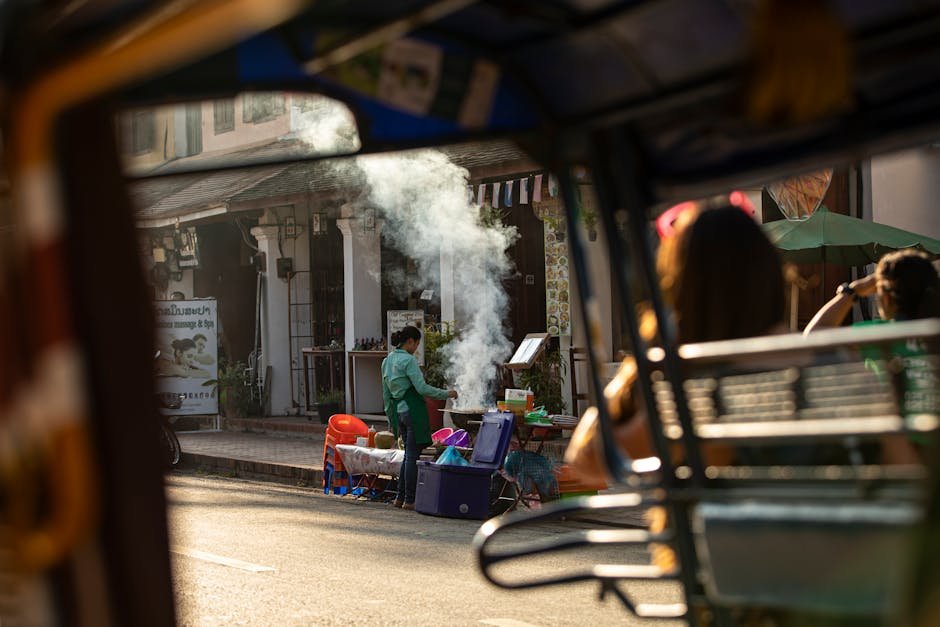 Photo: Pexels / Stephen Leonardi
Food prices in KL span a wider range than in most cities. Broadly, there are three levels:
Mostly cooking at home (the most common way newcomers save)
- Breakfast: coffee and bread at home, RM 5-10 a day
- Lunch: at home or packed, RM 15-25 a day
- Dinner: cooked at home, RM 30-50 in ingredients per meal (for four)
- Monthly total: RM 4,500-6,500 (about US$1,110 to 1,600) for a family of four
Fresh food in Malaysia comes at two very different price points: wet markets (pasar) are cheap, while premium supermarkets such as Cold Storage and Mercato are expensive. Newcomers who are used to supermarket hygiene easily do all their shopping at Cold Storage, and may spend RM 1,500-2,000 more a month on groceries (about US$370 to 490). I suggest mixing: meat and seafood from Cold Storage, vegetables and condiments from the pasar.
Mostly eating out
- Breakfast or lunch at a mamak or kopitiam-style café: RM 10-20 per person per meal
- Dinner at a food court or mid-range restaurant: RM 25-50 per person
- Monthly total: RM 8,000-14,000 (about US$1,970 to 3,450) for a family of four
Do not assume eating out in KL is always cheap. What is cheap is hawker and mamak food. Mid-range air-conditioned restaurants are not much cheaper than in pricier Asian cities, and sometimes cost more.
Fine dining (where KL really is cheap)
At Michelin-starred or international-brand restaurants in KL, expect RM 250-450 per person (about US$62 to 111), well below what comparable restaurants charge in East Asia’s major capitals. This is the “luxury item” where KL is genuinely good value.
My take: Many parents spend their first month excitedly trying a new restaurant every day, then in month two do the accounts and find “what we spent eating out equals a month’s rent”. In my experience, families who mix eating out with home cooking settle at around RM 5,000-7,000 a month (about US$1,230 to 1,720). Eating out for almost every meal pushes a family of four into the RM 8,000-14,000 range above, and much beyond that means regular fine dining, which is a lifestyle choice, not everyday living.
4. Transport: buying a car vs using Grab
This is one of the decisions newcomers most often get wrong: the instinct that “public transport in KL is poor, so I need a car” is not necessarily right.
The Grab route (ride-hailing)
- Regular short trips (5-10 km): RM 10-20 per trip
- Airport to city: RM 60-90 (about US$15 to 22)
- Typical month for a family of four: RM 800-1,500 (about US$200 to 370)
Suits: one parent and the children based near home, with the other parent not working in Malaysia and no long commute needed.
The car route
A used mid-size sedan (Toyota Vios, Honda City and similar): RM 60,000-90,000 (about US$14,800 to 22,200)
Fixed monthly costs:
- Fuel: RM 400-700 (depending on commute)
- Insurance and road tax: about RM 200 a month (spread over the year)
- Maintenance and depreciation: RM 300-500 a month
- Parking: condominiums almost always include a parking bay (covered by the maintenance fee); occasional parking elsewhere (malls, offices, hospitals) runs about RM 50-150 a month
Monthly total: RM 1,000-1,500 (about US$250 to 370) plus the one-off cost of the car
Traffic and congestion in KL are on a par with other big Asian cities. Foreigners need to convert their driving license, and you should read insurance terms carefully.
My recommendation
| Household situation | Recommendation |
|---|---|
| One parent and children, staying around Mont Kiara and DPC | Grab, plus occasional Lalamove for bulky items |
| Whole family, with one parent working in KL | Buy a used car, with the other parent using Grab |
| Single, or no children | Mostly Grab, rent a car for long trips |
5. Healthcare: private insurance premiums and out-of-pocket visits
Malaysia’s healthcare system has a clear split between public and private, and in practice foreigners almost all use private care.
Private health insurance premiums (most foreign families buy one)
| Age | Annual premium (RM) | About US$ |
|---|---|---|
| Children 0-18 | RM 2,500-4,500 | 620-1,110 |
| Adults 19-40 | RM 3,500-6,000 | 860-1,480 |
| Adults 40-55 | RM 5,000-9,000 | 1,230-2,220 |
| 55+ | RM 8,000-15,000+ | 1,970-3,690+ |
Premiums depend on the insurer, the coverage amount and whether dental is included. For a family of four (two adults, two children), a typical annual total is RM 18,000-30,000 (about US$4,430 to 7,390).
Paying out of pocket (without insurance)
- General practitioner visit: RM 60-150
- Outpatient visit at a private hospital: RM 200-500
- Tests (blood work plus basic imaging): RM 500-2,000
- Emergency department: RM 800-3,000+
Important reminders
- MM2H holders can choose from some medical insurance options (Malaysian policies from insurers such as Allianz and AIA)
- Check whether your home country’s health insurance covers treatment abroad; many public schemes do not, and can only be used when you go home for care
- Major surgery at private hospitals (such as Pantai, Sunway and Gleneagles) costs 30-50% less than in Singapore, but can cost more than treatment under a public health system at home
My take (insurance strategy): If you keep your home country’s public health cover and already have private medical insurance, then on the Malaysian side you only need basic private cover to fill the gaps: outpatient and emergency care here, and fly home for major illness under your home system. That way a family of four can bring Malaysian premiums down from RM 18,000-30,000 a year to RM 8,000-12,000 a year (about US$1,970 to 2,960). Most of my sharpest clients arrange it this way. Buying top-tier cover twice is wasted money.
6. Education: the true annual cost of international school
For families relocating for school, this is the biggest line in the monthly budget. I covered how to choose a school in the complete guide to international schools in Malaysia; here are just the finances:
| School tier | Year 1 tuition (per year) | High school tuition (per year) | Monthly cost per child |
|---|---|---|---|
| Top tier (ISKL / GIS / Alice Smith) | RM 80k-100k | RM 100k-130k+ | about RM 7,000-11,000 |
| Upper-mid (MKIS / TISP) | RM 60k-80k | RM 75k-100k | about RM 5,500-8,500 |
| Mid tier (ELC / KISS) | RM 40k-55k | RM 50k-70k | about RM 3,500-6,000 |
| Entry level (Sayfol and similar) | RM 25k-40k | RM 35k-50k | about RM 2,500-4,500 |
These figures are tuition only. The true annual cost is another 20-30% on top (uniforms, lunch, school bus, clubs, activities, exam fees, facility fees).
My take: For a family with two children, tuition plus school extras landing at RM 12,000-22,000 a month (about US$2,960 to 5,420) is normal. That is before extra English tutoring (almost every relocating family hires a tutor) and piano, swimming or art lessons (RM 80-250 a session, about US$20 to 62).
7. Everything else: domestic help, utilities, internet, gyms and entertainment
Domestic help (a common setup in Malaysian households)
- Full-time live-in helper from Indonesia or the Philippines: RM 1,800-2,800 a month (about US$440 to 690), including food and lodging
- Part-time cleaner (2-3 times a week): RM 600-1,200 a month (about US$150 to 300)
- A full-time helper needs a work permit, insurance and an agency fee (one-off RM 6,000-10,000, about US$1,480 to 2,460)
Utilities and internet (typical for a premium development)
- Electricity (four rooms with air-conditioning): RM 250-500 a month
- Water: RM 30-80 a month
- Internet (Unifi 500Mbps): RM 130-200 a month
- Mobile plan (per person): RM 60-120 a month
- Subtotal: RM 600-1,200 a month (about US$150 to 300) for a family of four
Gyms and entertainment
- Premium gyms (Fitness First, ChiFit, Celebrity Fitness): RM 200-400 per person per month
- Residents’ club membership: in many premium condominiums it is included free in the maintenance fee
- Cinema (GSC, MBO): RM 25-40 a ticket
- Karaoke, spa or massage: RM 60-200 per person per visit (this is where KL is much cheaper than many big Asian cities)
My suggested budget split (a practical version for a family of four)
This is a realistic mid-range budget: not top-end and not bare-bones, but the balance point of “comfortable without waste”.
| Item | Per month (RM) | About US$ | Notes |
|---|---|---|---|
| Rent (mid-range three-bedroom in Mont Kiara) | 5,500 | 1,350 | RM 8,000+ is premium and unnecessary |
| School fees (two children, mid tier) | 12,000 | 2,960 | The main cost with two children |
| Food (mix of eating out and home cooking) | 5,000 | 1,230 | Eating out for most meals runs RM 8,000+ |
| Transport (Grab plus occasional driving) | 1,200 | 300 | Includes occasional parking |
| Medical insurance (basic top-up, existing home-country cover) | 1,000 | 250 | Buying top-tier cover twice is waste |
| Domestic help (part-time cleaner 2-3 times a week) | 800 | 200 | Full-time live-in is RM 1,800+ |
| Utilities, internet and mobile | 700 | 170 | Electricity is the biggest; the rest are under 200 each |
| Entertainment and miscellaneous | 2,500 | 620 | Occasional restaurants, spa, cinema |
| Monthly total | RM 28,700 | about 7,070 |
This is “reasonable everyday living”. To save more, you can bring it down to RM 22,000-25,000 (about US$5,420 to 6,160) by choosing an entry-level school, dropping the cleaner and renting an older unit in Mont Kiara. To upgrade, you can take it to RM 35,000+ (about US$8,620+) with a top-tier school, a large DPC condominium and a full-time helper. But the “practical version” is the level I see most often among the more than a hundred families I have worked with.
The core conclusion (the one line to take away)
The useful question about the cost of living in KL is where it is good value and where it is poor value, rather than whether it is “cheap”:
- Compared with the major East Asian capitals, everyday spending in KL is roughly 25-30% lower, but not so low that it makes you financially free
- Expecting to live a big-city middle-class life at half price will not happen
- The real value is the non-monetary return of “international schooling for the children and an international life for the whole family”. That is the core reason most middle-class families move. Saving money is a bonus, not the main reason
If your calculation is “move to save money”, you will be disappointed once you work it out.
If your calculation is “move for the children’s education and the family’s international outlook, and enjoy somewhat lower prices along the way”, then the logic of the move holds up.
Frequently asked questions
Q1. How much cheaper is the cost of living in Malaysia?
“Cheaper” needs unpacking. Everyday spending (food, clothing, housing and transport) is roughly 25-30% lower than in the major East Asian capitals: a real gap, but not a dramatic one, luxury services (fine dining, massage) are 30-50% cheaper, and education (international school) costs about the same as premium private schools elsewhere, or more. So if your lifestyle is “middle class, international school, premium condominium”, Malaysia is not especially cheap. The value is that “the level of luxury you can afford goes up”.
Q2. What do newcomers most often underestimate?
The two most common traps I see: (1) exchange-rate moves: you budget in ringgit but earn in another currency, and in 2025 the ringgit rose 10.2% against the US dollar, turning “just enough” into “not enough”; (2) school extras beyond tuition: uniforms, the school bus, clubs, activities and English tutoring are easy to overlook, but together they add 25-30% to tuition. I recommend always budgeting at 110-115% of the upper estimate each month.
Q3. What turns out to be surprisingly cheap in KL?
Typically: (1) Michelin-level restaurants: fine dining at RM 250-450 per person (about US$62 to 111); (2) massage and spas: two hours at a premium spa for RM 150-300 (about US$37 to 74); (3) personal trainers: RM 100-200 a session (about US$25 to 49); (4) domestic helpers: in KL, a full-time live-in helper is a normal arrangement for middle-class households.
Q4. I want to move but I am not sure of my budget. How should I work it out?
The order I suggest: (1) choose the school first (tuition is the biggest fixed cost, and it also decides where you live) → (2) work out tuition as a monthly figure → (3) add rent (depending on the area) → (4) add RM 15,000-20,000 (about US$3,690 to 4,930) for living costs (food, transport, miscellaneous) → (5) multiply the total by 110-115% as a currency buffer. For the full school selection logic, see the complete guide to international schools in Malaysia.
Q5. How big is the difference between KL and Singapore, Hong Kong or Bangkok?
Using rough positions from the Numbeo Cost of Living Index: Singapore’s index is roughly 2.3 times KL’s and Hong Kong’s about twice (rent especially); Bangkok is slightly higher than KL (with less choice in healthcare and international schools); Tokyo is about 40% higher than KL. Many families find KL’s combination of “living costs 25-30% below the East Asian capitals, much cheaper luxury services and a wide choice of international schools” good value for what they need. Singapore is good but too expensive, Bangkok is cheap but short on strong international schools, and Hong Kong is as expensive as Singapore with a different education environment.
Q6. Can a family of four manage on RM 20,000 a month?
Yes, at RM 20,000 (about US$4,930), but with these trade-offs: (1) live in an older or more outlying unit in Mont Kiara (saving RM 2,000-4,000 a month, about US$490 to 990); (2) choose an entry-level school or cut back on activities (saving RM 3,000-5,000 a month per child, about US$740 to 1,230); (3) cook mostly at home and limit eating out; (4) rely on Grab rather than buying a car. This budget is close to what Malaysian middle-class families really live on. You can live comfortably, but the question “why move here at all?” becomes sharper: if it is not for international schooling and an international environment, simply “moving to KL to save money” does not really hold up.
For more like this: our LINE community, YouTube channel "Hi 我是David" (in Mandarin), or email david.lai@xinwaycapital.com.