
Cost of Living: Kuala Lumpur vs Penang vs Johor Bahru
Published Updated
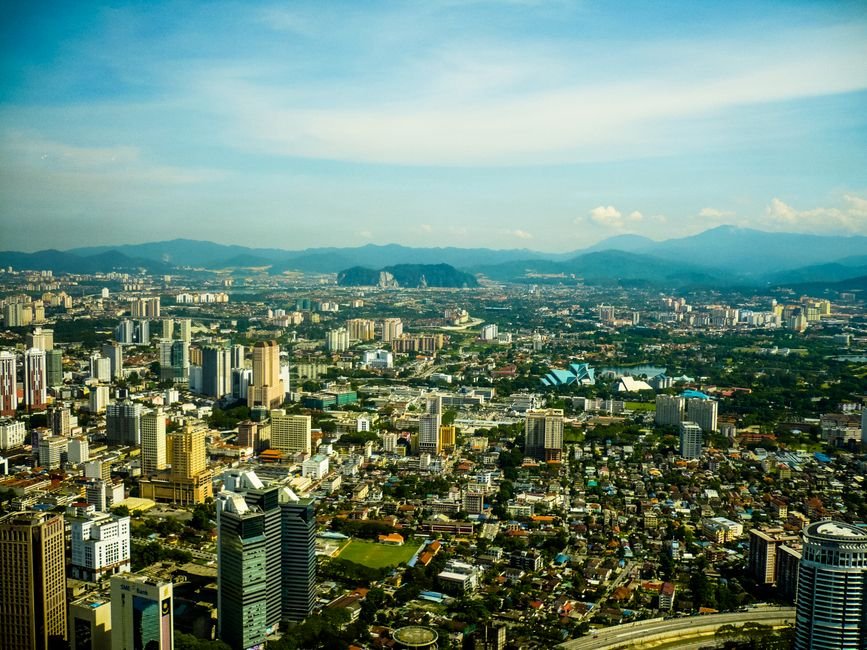
“Penang must be cheaper, right?”
That is the assumption I hear more than any other. The answer: not necessarily, and quite often it is wrong.
Comparing the cost of living in Malaysia’s three main relocation destinations is not a simple case of “big city expensive, smaller city cheap”. I have lived in Kuala Lumpur for five years, and in this article I lay out how living costs really differ between Kuala Lumpur, Penang and Johor Bahru (JB), based on what I have seen myself.
Contents
- Common misconceptions about living costs in the three cities
- Kuala Lumpur: expensive in the center, flexible in the suburbs
- Penang: not as cheap as you think
- Johor Bahru: the cheapest, with conditions
- Beyond the numbers: choose your lifestyle first, then the city
- Frequently asked questions
Common misconceptions about living costs in the three cities
When people research Malaysian living costs from overseas, what they usually find is a comparison of overall price levels, and the conclusion is usually “Malaysia is cheaper than home”. That may well be true, but it hides an important detail: the gap between the three cities is smaller than most people assume.
On this topic, there are three misconceptions I most often have to correct:
- Misconception one: “Penang is the cheapest option.” In my experience, not by as much as people expect.
- Misconception two: “JB is expensive because it is next to Singapore.” True, but only in certain areas.
- Misconception three: “Prices in central Kuala Lumpur are unbearably high.” Also not true. It depends on how you live.
My take: Prices across the three cities do not follow the intuitive “big city expensive, smaller city cheap” pattern. Only once you go do you find that everyday dining in Penang costs about the same as in Kuala Lumpur, and JB has pricey pockets driven by Singapore salaries flowing back across the border.
Kuala Lumpur: expensive in the center, flexible in the suburbs
Of the three cities, Kuala Lumpur has the most clearly tiered prices. Established areas popular with expatriates, such as around KLCC, Mont Kiara and Bangsar, are genuinely expensive, comparable to the prime districts of other Asian capitals.
KL’s advantage is flexibility. If you are willing to live in the suburbs and commute into the center by MRT, you can bring your costs down a lot. KL has the most complete rail network of the three cities, so you can live in a cheaper area and still reach work, good international schools and quality hospitals within an acceptable travel time.
For foreigners relocating here, KL has another advantage: almost any service you can think of is available here. The widest choice of international schools, the most complete medical facilities and the most developed commercial amenities. None of this is free, but compared with a smaller city where much is missing, many people end up choosing Kuala Lumpur for exactly this reason.
The properties I manage in KL include both freehold and leasehold, covering the city center and the suburbs. My observation: suburban units rent for about half to 60% of comparable-quality units in the center, while the gap in quality of life is much smaller than the gap in rent.
Rough monthly costs in Kuala Lumpur
| Item | City center | Suburbs |
|---|---|---|
| Rent (1-bedroom condominium) | RM 2,500 to 4,000 | RM 1,200 to 2,200 |
| Food and dining | RM 1,500 to 2,500 | RM 800 to 1,500 |
| Transport | RM 500 to 800 | RM 300 to 600 (including Grab) |
| Other living expenses | RM 500 to 1,000 | RM 400 to 800 |
| Monthly total, one person | RM 5,000 to 8,300 (about US$1,230 to US$2,040) | RM 2,700 to 5,100 (about US$670 to US$1,260) |
Penang: not as cheap as you think
What draws people to Penang? The UNESCO World Heritage old town of George Town, scenery where the hills meet the sea, and a more relaxed pace of life. All of that is real.
But in my experience, the idea that it is cheap is overstated.
Every time I tell clients heading to Penang that “Penang is not as cheap as you think”, they are surprised. The reality: a plate of chicken rice, a cup of coffee, an ordinary meal out cost about the same in Penang as in Kuala Lumpur. In George Town’s heritage quarter, tourism has long since pushed restaurant and café prices above “cheap”.
My take: “Prices in Penang are not low. A plate of chicken rice is probably not much cheaper than in Kuala Lumpur.”
Another underrated limitation in Penang is transport. Kuala Lumpur has a complete rail and public transport network. Penang does not. Living in Penang without a car limits your options a lot, and Grab fares add up. Once you add transport costs, Penang’s overall cost of living is not necessarily lower than suburban KL.
Penang suits people who: are not in a hurry, do not need a big-city business environment, love heritage and coastal scenery, and are willing to pay a little more for a slower pace of life. It does not suit people who: want to save money, need a wide choice of schools, or still have a business to run.
Johor Bahru: the cheapest, with conditions
 Photo: Pexels / Pak WanJanggut
Of the three cities, JB does have the lowest basic cost of living overall. Rent, everyday meals out and supermarket groceries are all cheaper than in Kuala Lumpur and Penang.
But JB has a very particular feature: the effect of Singapore salaries flowing back.
Only the Johor Causeway separates JB from Singapore. Many JB residents work in Singapore, earn Singapore salaries, and come back to JB to live and spend. Their spending power is far above the Malaysian average, and it has pushed up prices for dining and entertainment in parts of central JB. If those are the areas you frequent, JB will not feel cheap at all.
My take: “If you can earn three times the salary in Singapore and come back to JB to spend it, of course you are more willing to spend. Prices in parts of the city center are not much cheaper than in Kuala Lumpur.”
The other reality in JB: overall amenities are still developing. Kuala Lumpur and Penang are mature cities with complete commercial, education and healthcare infrastructure. Plenty of places in JB are still “just building homes”, and the infrastructure is not as complete as in the other two cities.
For people who are budget-conscious, plan to work in Singapore (or already do), and do not need many big-city amenities, JB is worth serious consideration. It does not suit people who want it as their main base while expecting KL-level amenities.
Beyond the numbers: choose your lifestyle first, then the city
The price differences between the three cities are actually smaller than the lifestyle differences. The key question when choosing a city is not “where is cheapest?” but “what kind of life do I want?”
| Lifestyle | Best-fit city |
|---|---|
| Need job opportunities or still running a business | Kuala Lumpur |
| Children attending international school | Kuala Lumpur (widest choice) |
| Retired, value a relaxed pace, love heritage and scenery | Penang |
| Limited budget, or a job opportunity in Singapore | Johor Bahru |
| Buying to invest, rental yield comes first | Kuala Lumpur (most active rental market) |
My take: “Choose your pace of life first, then the city. Do not choose a city and then try to adapt to its pace. The three cities have very different personalities, and the right one is the one that fits you.”
After five years in KL, I obviously have my own bias. But I have seen many relocations fail not because of money, but because the city did not match the person’s needs. Before you commit to a city, living there for a few weeks is more useful than reading any article.
What I did myself: in my first year I rented, explored different parts of KL, then spent two weeks in Penang and a few days in JB. After that trip I was sure KL was the city that fit my working pace. That judgment came from living there, not from research.
An often overlooked cost: the price of switching cities
Many people research from home, decide on a city, arrive, discover it is not right and want to move to another city. That switching cost is higher than most people estimate: lease break penalties, moving costs, finding a new school or job, rebuilding a social circle. It adds up to a significant amount.
The gap in living costs between Kuala Lumpur, Penang and Johor Bahru hardly matters next to the loss from choosing the wrong city and moving again. Get the early decision right, and the cost of living afterward stops being the issue.
Among the properties I manage, several families moved between Malaysian cities twice before they settled. All of them later said that if they had spent a month in each city before deciding, they would have saved themselves a great deal of hassle. Choosing the wrong city costs far more than the differences in living costs between the three. The lesson I have seen in KL: choose the right city and everything falls into place; choose the wrong one and no amount of low prices will make you comfortable.
Frequently asked questions
Q1. What counts as central Kuala Lumpur, and how big is the price difference?
When people say “central KL”, they usually mean KLCC and the expatriate hubs nearby, such as Mont Kiara, Bangsar and Bangsar South (strictly speaking, Mont Kiara and Bangsar are separate residential areas rather than the city center). Rent and dining in these areas cost roughly 1.5 to 2 times what comparable quality costs in the suburbs. But because the rail network is convenient, commuting into the center from a bit further out is not difficult.
Q2. How different are healthcare costs across the three cities?
Private hospital costs in Malaysia do not differ much between the three cities, because most private hospital chains set prices at group level. KL has the widest choice of top private hospitals, Penang also has several good private hospitals, and JB has comparatively fewer options.
Q3. With a family, what is the typical monthly cost range in Kuala Lumpur?
A family of four with two children at a mid-tier international school and a rented condominium of two bedrooms or more usually spends RM 22,700 to 37,000 a month (about US$5,600 to US$9,100), varying widely with the school and the area. The line-by-line budget is in the complete guide to the cost of living in Malaysia. International school fees are the biggest item. For details, see the true annual cost of international school in Malaysia.
Q4. For retirement, which city offers the most budget flexibility?
Penang has the strongest appeal for retirees: a slow pace of life and beautiful scenery. But suburban Kuala Lumpur is not necessarily more expensive than Penang, and it has more healthcare options. JB is the lowest-budget option, but with comparatively fewer amenities.
Q5. Have prices in Malaysia gone up in recent years?
Yes, especially rents and eating out since the pandemic. The return of foreign investment, more families moving here for international schools and the relaunch of MM2H (Malaysia My Second Home) have all pushed KL rents up. At today’s prices, costs are noticeably higher than in 2021 when the country first reopened, but overall Malaysia remains competitive compared with Singapore and many other places in the region.
Want to go deeper?
- A full breakdown of living costs in Malaysia → The complete guide to the cost of living in Malaysia
- International school is the biggest cost for relocating families → The true annual cost of international school in Malaysia
For more like this: our LINE community, YouTube channel "Hi 我是David" (in Mandarin), or email david.lai@xinwaycapital.com.