
Malaysia Mortgage for Foreigners: Loan Ratios, MM2H and Money
Published Updated
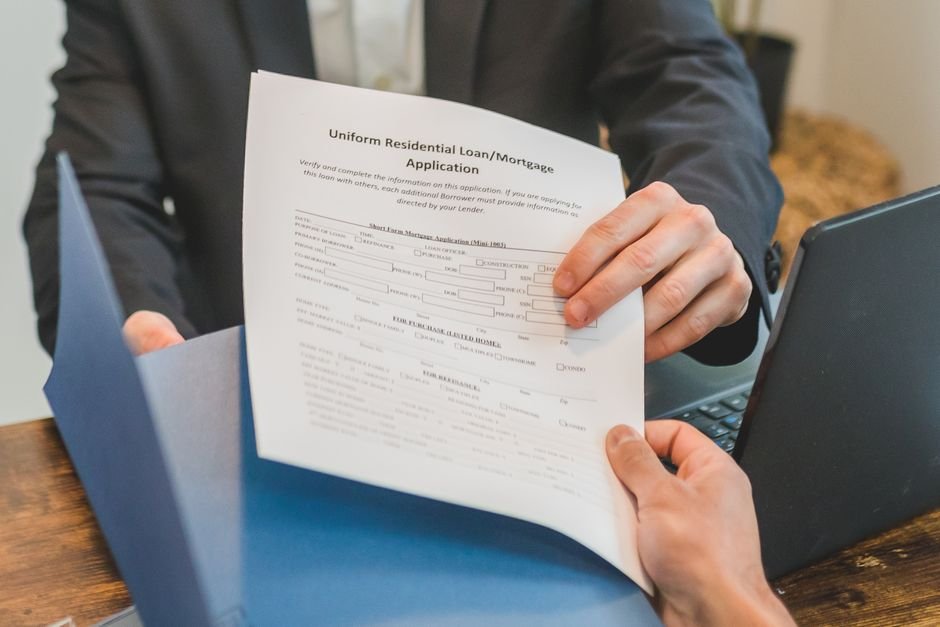
Over the past few years, after asking “which area is worth buying in?”, almost every overseas client I meet asks the same second question: “I’m a foreigner. If I apply for a mortgage in Malaysia, will the bank just reject me?”
My answer has always been: they will not reject you, but the terms are different from those for locals. The core differences in a Malaysia mortgage for foreigners are the loan-to-value ratio (LVR, also called the margin of finance) and how much of a “presence” you have with a local bank. In this article I share the first-hand information I gathered from interviewing bank credit officers, including the LVR ranges, how MM2H (Malaysia My Second Home) really helps, and why I keep saying “money matters more than visa status”. If you are weighing up buying property in Malaysia, this information will directly affect your financial planning.
Contents
- What loan-to-value ratio can foreigners get in Malaysia?
- How do long-term visas (MM2H, work permits) affect mortgage terms?
- The most important lever for foreigners: bank priority status
- What MM2H really adds: a strong document or a requirement?
- Money matters more than visa status: my core argument and the strongest combination
- Which documents to prepare before applying
- Frequently asked questions
What loan-to-value ratio can foreigners get in Malaysia?
The most direct difference between a mortgage for foreigners and one for locals is the loan-to-value ratio. Bank Negara Malaysia (the central bank) allows banks to set their own ratios based on the applicant’s status. The ranges below come from my conversations with bank credit officers, not from a regulatory rule. The current market picture is roughly as follows:
Foreigners with no local long-term visa and income earned overseas
- Loan-to-value ratio: 50% to 70%
- This means you need a down payment of at least 30% to 50%
- If all your income documents are overseas payslips, some banks take a more conservative approach
Foreigners holding a long-term visa (MM2H or a work permit)
- Loan-to-value ratio: 70% to 80%
- Roughly 10 percentage points more than foreigners without one, a significant difference
- If you also reach the bank’s priority (VIP) tier, you can get another 5%, up to a ceiling of 85%
Malaysian citizens
- Loan-to-value ratio: 90%, and some first-time buyers can reach 95% under specific schemes
Take a RM 1,500,000 home (about US$369,000) as an example. A foreigner without a long-term visa needs a down payment of at least RM 450,000 to RM 750,000 (about US$111,000 to US$185,000). If you can push the ratio to 80% or 85%, the down payment falls to RM 225,000 to RM 300,000 (about US$55,000 to US$74,000), a clear difference. That is why, when I help clients plan their finances, the first thing I confirm is which LVR range they can reach.
For the overall regulatory framework on property financing, see the public information on the Bank Negara Malaysia official website.
How do long-term visas (MM2H, work permits) affect mortgage terms?
Many clients ask me: “Which helps more with a mortgage, MM2H or a work permit?”
The answer I got from bank credit officers surprises a lot of people: under the way banks currently assess applications, MM2H and a work permit are treated as the same level of evidence of long-term residence. Neither is stronger.
That runs against many people’s intuition. People tend to assume MM2H, as a government-backed residence program, should carry more weight than a work permit. But from the bank’s point of view:
- A work permit means you have a local employer and local salary coming in: this helps directly with loan approval, because the bank can see your local income documents
- MM2H means you have actively brought assets into Malaysia: it is a government-issued visa that involves a degree of financial screening
- Both meet the bank’s threshold for signaling “an intention to reside long term”, so the LVR is handled the same way
So if you are considering MM2H to raise your loan-to-value ratio, I would say: the logic is right, but the effect is less decisive than you might think. What really decides whether you get 80% or 85% is bank priority status, covered in the next section.
The most important lever for foreigners: bank priority status
If there is one thing I most want overseas clients to do before deciding to buy, it is this: build up priority-tier assets in an account with a local Malaysian bank.
This directly affects your mortgage terms as a foreigner, and it matters more than your visa status.
What is bank priority status?
Each bank sets its own threshold for priority tiers (Priority Banking or Preferred Banking), but generally you need deposits or investments of RM 250,000 to RM 500,000 or more (about US$62,000 to US$123,000). Once you reach that tier, the priority your mortgage application gets, the bank’s attitude toward approving it and your room to negotiate the interest rate all change.
Priority status brings two direct mortgage benefits:
- A higher loan-to-value ratio: the baseline for foreigners with a long-term visa is 70% to 80%. As a priority client you can get another 5%, up to the 85% ceiling
- Room to negotiate the rate: priority clients may get a lower lending rate than ordinary applicants, and the interest saved over the long term is substantial
A key detail: where the money sits matters
A client once asked me: “I have a lot of savings with HSBC in my home country, and HSBC also operates in Malaysia. Does that count?”
The answer: no.
HSBC account balances in another country are not automatically linked to HSBC Malaysia’s assessment system. You must actually transfer the funds into a local bank account in Malaysia for them to count toward priority status. Many people fall into this trap, so I want to be very clear about it here.
What MM2H really adds: a strong document or a requirement?
 Photo: Pexels / RDNE Stock project
When I go through the factors that strengthen a foreigner’s mortgage application, I often need to help clients understand where MM2H fits.
MM2H is a “strong document”, not a requirement
This is how bank credit officers put it: the MM2H visa is issued by Malaysia’s Ministry of Tourism, Arts and Culture (MOTAC), and the application includes a financial threshold review, so to the bank it is a credible government document. Submitting MM2H documents sends the bank a signal: “this person intends to live in Malaysia long term and has already passed the government’s background checks.”
But “helpful” does not mean “impossible without it”. I know several clients with no long-term visa who still completed their purchase at a 70% ratio without MM2H, on the strength of large deposits with a local bank.
When MM2H is actually useful
In my practice, MM2H works best as a strong document when:
- You plan to live or retire in Malaysia long term anyway, so MM2H also makes sense for your daily life
- Your local bank assets are not yet enough for priority status, and you need the visa to support your loan-to-value ratio
- You are applying to several banks at once, and MM2H helps the credit reviews go more smoothly
If you are buying purely as an investment and have enough funds to reach priority status, MM2H is not a prerequisite.
Money matters more than visa status: my core argument and the strongest combination
Across all the foreigner mortgage cases I have worked on, the line I repeat most often to clients is: money matters more than visa status, but doing both together is the safest strategy.
The reasoning goes like this:
What a long-term visa can do:
- Raise the loan-to-value ratio from 50% to 70% (no long-term visa) to 70% to 80% (long-term visa)
- Show the bank your intention to reside long term
- Strengthen your loan documents
What substantial assets in a local bank can do:
- Raise the ratio by another 5%, up to the 85% ceiling
- Create room to negotiate the interest rate
- Make the bank’s overall attitude toward your application more favorable
If you can only do one first, my advice is: move your funds into a local Malaysian bank first and build a priority-tier asset base. The effect is immediate and measurable, unlike an MM2H application that takes time to be approved, and the money in a local bank is part of your asset allocation anyway.
The strongest combination
Of course, if you have enough time to plan, doing both together is the safest approach:
- Transfer funds into a local Malaysian bank 6 to 12 months in advance to reach priority status
- At the same time, decide whether to apply for MM2H (if you plan to live here long term)
- Prepare proof of overseas income, tax documents and proof of local assets
- Then have a mortgage advisor apply to 2 or 3 banks at the same time and compare rates and ratios
Do this and your loan-to-value ratio as a foreigner could reach 85%, with a relatively favorable interest rate. For a property worth over RM 1 million, the difference can change the down payment you need by hundreds of thousands of ringgit.
Which documents to prepare before applying
When applying for a Malaysian mortgage as a foreigner, banks usually ask for these basic documents:
Personal identification
- Original passport and copies (usually valid for at least 12 more months)
- Long-term visa (if any): MM2H approval letter, Employment Pass and so on
Proof of income
- Payslips from your overseas employer (last 3 to 6 months)
- Overseas bank statements
- Tax returns (required by some banks)
- If self-employed, company financial statements or tax documents
Proof of local assets
- Latest statements from your Malaysian bank deposit or investment accounts
- Confirmation of VIP or Priority Banking status (if any)
Property documents
- Draft Sale and Purchase Agreement (SPA)
- Property valuation report (required by some banks)
While you prepare the documents, I suggest submitting applications to 2 or 3 banks at the same time. Banks assess foreigners’ mortgage applications differently, and applying to several lets you get the best combination of rate and loan-to-value ratio.
Frequently asked questions
Q1. Do Malaysian banks require foreigners to have a local job to get a mortgage?
You do not have to have a local job. Overseas payslips are accepted as income documents, but local income usually helps the bank’s attitude toward approval. If you apply with overseas income only and no long-term visa, the ratio may fall in the more conservative 50% to 60% range.
Q2. Do MM2H holders get the same mortgage rates as Malaysians?
Usually not exactly the same, but the gap can narrow. With MM2H plus priority status at a local bank, your rate may come close to what locals get, but in the end it depends on each bank’s policy and the outcome of negotiation.
Q3. I have large savings in my home country. Can I use them directly to raise my Malaysian loan-to-value ratio?
No. Bank deposits in another country are not counted by Malaysian banks toward priority status. The money must actually be transferred into a local Malaysian bank account to count. Many overseas clients misunderstand this.
Q4. Do I have to go through an agent or advisor to apply for a Malaysian mortgage, or can I go to the bank myself?
You can apply yourself. But for foreigners, an advisor who knows how banks assess applications can usually help you choose the most suitable bank, prepare more complete documents and possibly negotiate a better rate.
Q5. If one bank rejects me, can I apply to others?
Yes. Malaysian banks each have different policies on mortgages for foreigners, and a rejection from one does not mean a rejection from all. I generally suggest applying to 2 or 3 banks at the same time, so that a single bank’s criteria do not derail your whole purchase.
Further reading
For more like this: our LINE community, YouTube channel "Hi 我是David" (in Mandarin), or email david.lai@xinwaycapital.com.